

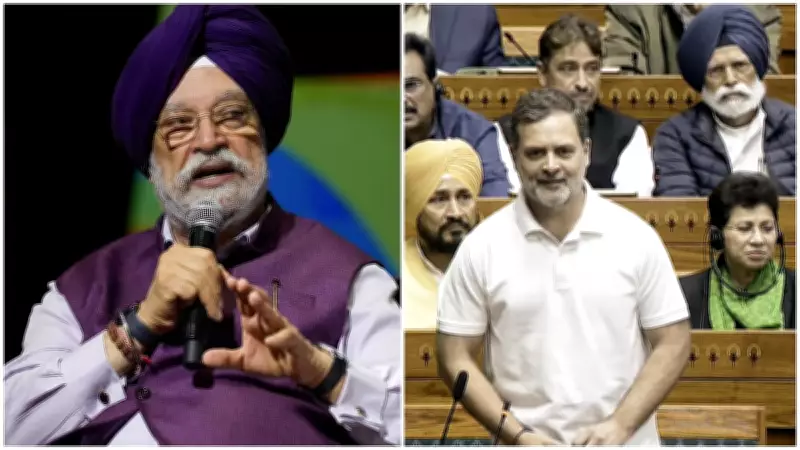
Union Minister Hardeep Puri Rebuts Rahul Gandhi's Allegations in Epstein Email Controversy
In a sharp political exchange, Union Minister Hardeep Puri has firmly denied allegations made by Congress leader Rahul Gandhi regarding an email connection with convicted sex offender Jeffrey Epstein. Puri asserted that the communication was a solitary email exchange and had no association with Epstein's notorious crimes on his private island.
Details of the Email and Political Accusations
Rahul Gandhi had leveled charges against Puri, suggesting involvement or awareness of Epstein's activities through email correspondence. However, Puri clarified that the email in question was a single, isolated instance and pertained to routine matters, completely unrelated to the heinous acts Epstein committed. He emphasized that attempting to link him to such crimes is baseless and politically motivated.
The controversy has ignited a heated debate in Indian political circles, with Puri accusing Gandhi of spreading misinformation to tarnish his reputation. This incident underscores the escalating tensions between the ruling Bharatiya Janata Party (BJP) and the opposition Congress party, as both sides leverage international scandals for domestic political gain.

Broader Implications and Reactions
Political analysts note that this episode reflects a growing trend of using global issues, like the Epstein case, to attack opponents in India. Puri's defense highlights the importance of context in such allegations, urging the public to discern facts from political rhetoric. The minister's statement aims to quell any speculation and reinforce his stance against what he calls "false narratives."
As the story develops, it remains to be seen how this will impact the ongoing political discourse, with both parties likely to continue their verbal sparring. The focus on Epstein's crimes, while serious, has been diverted into a domestic political battle, raising questions about the ethical use of such sensitive topics in election-year politics.






