Rahul Gandhi Condemns Modi Government's Crackdown on Youth Congress Protesters
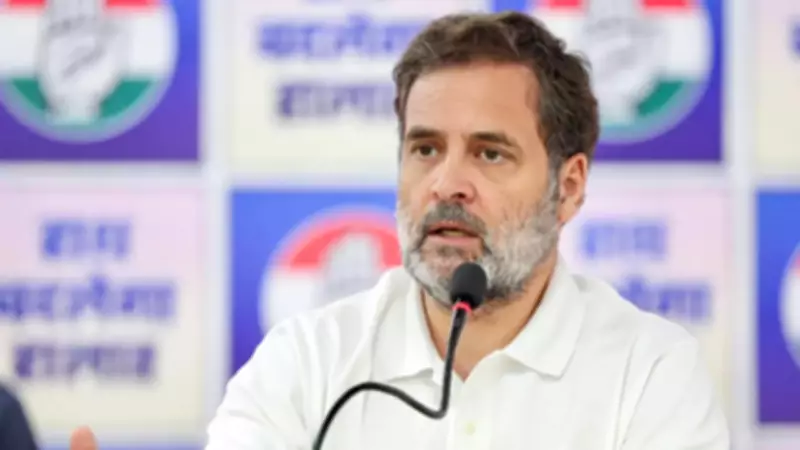
Leader of Opposition Rahul Gandhi has launched a scathing attack on Prime Minister Narendra Modi's administration following the controversial arrest of Youth Congress members who staged a 'shirtless' demonstration during the India AI Impact Summit in New Delhi. Gandhi accused the central government of systematically suppressing peaceful dissent and constitutional protest methods.
'Dissent Branded as Treason in World's Largest Democracy'
In a strongly worded social media post, Gandhi expressed grave concerns about the direction of Indian democracy. "The world's largest democracy is being slowly pushed in a direction where dissent is branded as treason and asking questions is called a conspiracy," Gandhi stated. He elaborated further, "Think about it – no matter the issue, if you raise your voice against those in power through constitutional means, then batons, lawsuits, and jail are almost a certainty."
The Congress leader emphasized the fundamental democratic principles at stake. "Peaceful protest is not a crime – it is the soul of democracy. Asking questions is not democracy's weakness, it is its strength," Gandhi asserted, highlighting what he views as an alarming trend of criminalizing legitimate political opposition.

Arrests Following Controversial AI Summit Demonstration
The political firestorm erupted after Indian Youth Congress (IYC) president Uday Bhanu Chib and several party workers were taken into custody in connection with their protest at Bharat Mandapam during the high-profile artificial intelligence summit. The demonstrators had entered the venue wearing T-shirts concealed beneath winter clothing, later removing their shirts while chanting slogans critical of Prime Minister Modi.
Police authorities identified Chib as the alleged "mastermind" behind the coordinated demonstration, bringing the total number of arrests in the case to eight individuals. The protest specifically targeted what Youth Congress members described as a "US Trade deal harmful to the country," though government officials have defended the agreement as beneficial for India's economic interests.
Gandhi's Solidarity with Arrested Youth Wing Members
Rahul Gandhi expressed unwavering support for the detained Youth Congress activists, whom he affectionately referred to as "Babbar Sher comrades" – a term meaning 'lion comrades' in Hindi. "I am proud of my Babbar Sher colleagues in the Youth Congress, who have fearlessly raised their voices in the interest of the country against the 'COMPROMISED PM'," Gandhi declared in an earlier statement.
The opposition leader reiterated that peaceful protest represents a fundamental democratic right protected by the Indian Constitution. "Raising questions against the government should not be treated as a crime," Gandhi emphasized, arguing that the arrests represent an overreach of state power against legitimate political expression.
Escalating Political Controversy and Accusations
The arrests have triggered a significant political confrontation between India's two largest political parties. The Congress party has vehemently denounced the police action as politically motivated and intended to silence opposition voices during an important international event.
Conversely, the ruling Bharatiya Janata Party (BJP) has accused Congress of attempting to embarrass the nation on the global stage during a prestigious summit focused on artificial intelligence and technological innovation. BJP representatives have characterized the protest as disruptive and inappropriate for the diplomatic setting of the AI Impact Summit.
The incident has reignited debates about the boundaries of protest in democratic societies, the government's response to political dissent, and the appropriate venues for expressing opposition to government policies. As the legal proceedings against the arrested Youth Congress members continue, the political ramifications are likely to extend beyond this single event, potentially influencing broader discussions about civil liberties and democratic norms in contemporary India.