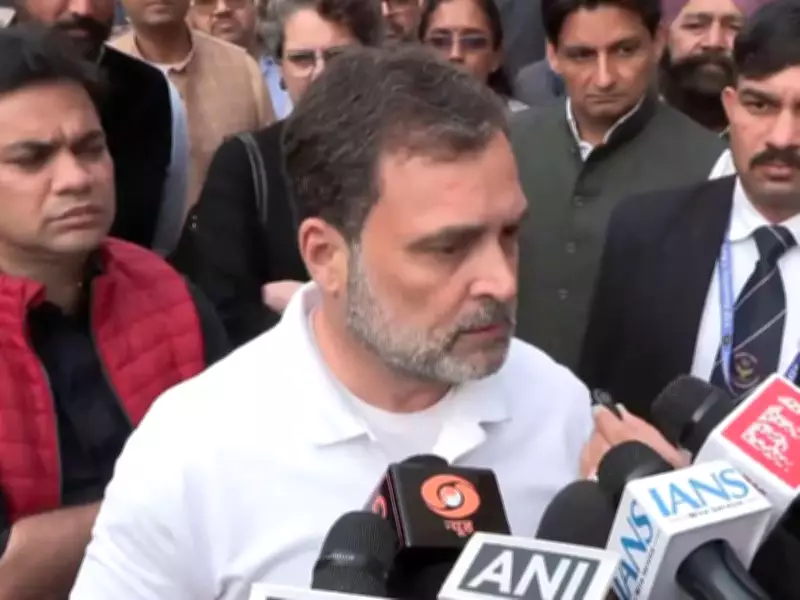
Rahul Gandhi Sounds Alarm Over Potential India-US Trade Agreement
Congress leader Rahul Gandhi has issued a stark warning regarding the ongoing negotiations for a comprehensive trade deal between India and the United States. He emphasized that such an agreement poses significant risks to the livelihoods of Indian farmers and could severely undermine the nation's hard-earned food security.
Core Concerns: Protecting Farmers and Domestic Food Systems
In his critique, Gandhi highlighted that a trade pact with the US, if not carefully structured, could flood the Indian market with heavily subsidized American agricultural products. This influx, he argued, would create an uneven playing field where small and marginal Indian farmers, who form the backbone of the agricultural sector, would struggle to compete. The potential consequences include depressed local crop prices, reduced farm incomes, and increased economic distress in rural communities.
"The primary concern is the survival of our annadatas (food providers)," Gandhi stated, framing the issue as a matter of national priority. "Any trade deal must first and foremost safeguard the interests of our farmers and ensure the stability of our food supply chains."

Broader Implications for National Food Security
Beyond immediate economic impacts on farmers, Gandhi pointed to the strategic risk to India's food sovereignty. He cautioned that over-reliance on imported food grains could make the country vulnerable to global price volatility and supply chain disruptions. This, in turn, might compromise the government's ability to maintain stable food prices and ensure adequate nutrition for its vast population through schemes like the Public Distribution System (PDS).
The Congress leader urged the government to adopt a cautious and transparent approach in the negotiations. He called for detailed parliamentary discussions and consultations with farmer unions and agricultural experts before finalizing any agreement. "The terms of this deal must be made public, and its impact on agriculture must be thoroughly assessed," he insisted.
Political and Economic Context of the Trade Talks
The India-US trade negotiations have been a focal point of bilateral relations, aiming to boost economic ties and resolve longstanding market access issues. Key discussion points often include tariffs on agricultural goods, intellectual property rights, and digital trade. However, the agricultural sector remains a sensitive and complex area, given its socio-economic importance in India.
Gandhi's remarks align with broader apprehensions within certain political and agricultural circles about the potential downsides of liberalizing farm trade. Critics argue that without robust safeguards, Indian farmers could be exposed to unfair competition from large-scale, mechanized American agribusinesses that benefit from substantial government subsidies.
As the dialogue progresses, balancing trade liberalization with the protection of domestic agricultural interests will be a critical challenge for Indian policymakers. The outcome could have lasting implications for millions of livelihoods and the nation's strategic food reserves.