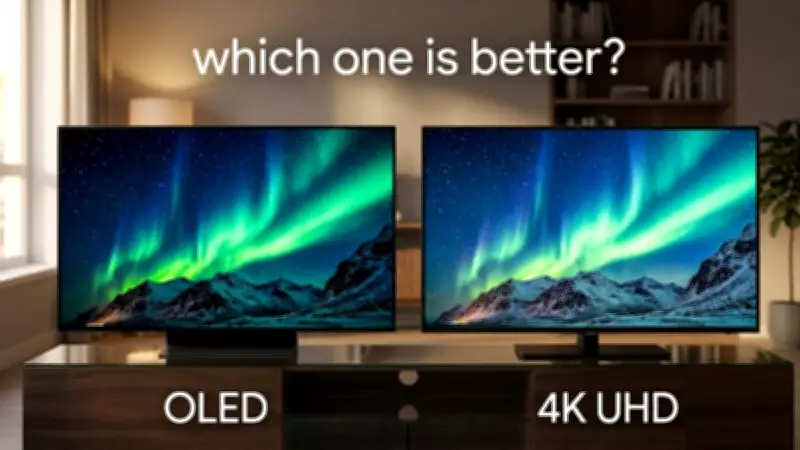
When shopping for a new television or monitor, two terms dominate the conversation: OLED and 4K UHD. While they are often mentioned together, they refer to different aspects of display technology. Understanding the distinction is crucial for making an informed purchase decision.
What is OLED?
OLED stands for Organic Light Emitting Diode. Unlike traditional LED-LCD displays that require a backlight, OLED pixels emit their own light. This allows each pixel to be turned on or off independently, resulting in perfect black levels and infinite contrast ratios. According to display experts, OLED panels offer superior color accuracy and wider viewing angles compared to LCD-based screens.
What is 4K UHD?
4K UHD (Ultra High Definition) refers to a resolution of 3840 x 2160 pixels, which is four times the pixel count of Full HD (1920 x 1080). This higher resolution delivers sharper images and finer details, especially on larger screens. 4K UHD is a resolution standard, not a display technology. It can be implemented in various panel types, including LED-LCD, QLED, and OLED.

Key Differences Between OLED and 4K UHD
The primary difference is that OLED is a display technology, while 4K UHD is a resolution specification. A TV can be both 4K and OLED, but they are not mutually exclusive. For example, many high-end TVs feature OLED panels with 4K resolution. However, you can also find 4K TVs that use LED-LCD or QLED technology.
OLED excels in contrast and black levels, making it ideal for dark room viewing and HDR content. In contrast, LED-LCD 4K TVs often achieve higher peak brightness, which is beneficial for bright rooms. According to a report by Consumer Reports, OLED TVs typically have a contrast ratio of over 1,000,000:1, while LED-LCD TVs average around 5,000:1.
Which One Should You Buy?
Your choice depends on your viewing environment and budget. If you prioritize cinematic picture quality with deep blacks and vibrant colors, an OLED 4K TV is the best option. However, OLED panels are generally more expensive and may be susceptible to burn-in with static images. For bright rooms or budget-conscious buyers, a 4K UHD LED-LCD TV offers excellent value with high brightness and no burn-in risk.
Industry analyst David Chen notes, "For most consumers, a 4K UHD LED-LCD TV provides a great viewing experience at a fraction of the cost of OLED. But for home theater enthusiasts, OLED's perfect blacks are unmatched."
Conclusion
In summary, OLED and 4K UHD are not competing technologies. OLED defines how the display produces light, while 4K UHD defines the resolution. When buying a TV, consider both factors: resolution (4K or 8K) and panel technology (OLED, QLED, LED-LCD). For the best picture quality, choose an OLED 4K TV. For a more affordable option, a 4K UHD LED-LCD TV is a solid choice.