

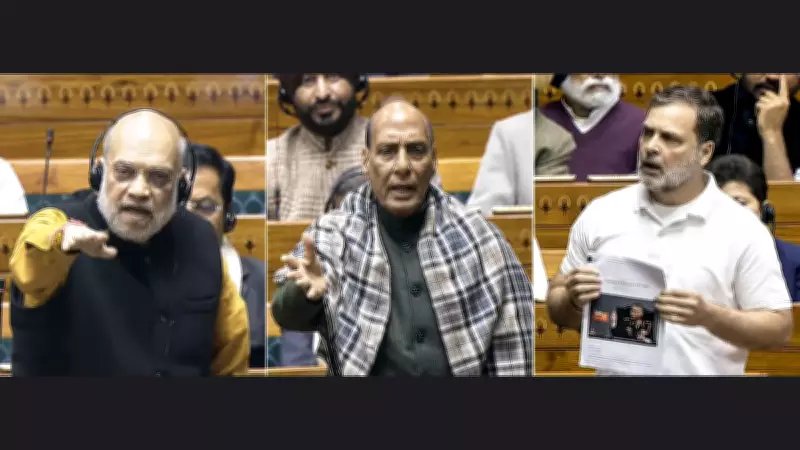
Congress Questions PM Modi's Leadership Over Ex-Army Chief's Memoir Revelations
Congress leader Rahul Gandhi has launched a sharp attack on Prime Minister Narendra Modi's government following revelations in former Army Chief General MM Naravane's memoir. The political firestorm erupted after excerpts from the book highlighted tensions during General Naravane's tenure, prompting the Congress party to question the Prime Minister's handling of military affairs.
Rahul Gandhi's Direct Challenge to PM Modi
Rahul Gandhi took to social media to directly challenge Prime Minister Modi, citing General Naravane's account as evidence of what he described as "serious lapses in national security management." The Congress leader demanded transparency and accountability from the government, arguing that the memoir exposed critical decision-making flaws during sensitive military operations.
The Congress party has formally raised several questions:

- Why were there apparent disagreements between military leadership and political authorities during General Naravane's tenure?
- What specific incidents mentioned in the memoir reflect poorly on the government's strategic direction?
- How does the Prime Minister plan to address the concerns raised about civil-military relations?
Law Minister Kiren Rijiju's Strong Objection
Union Law Minister Kiren Rijiju swiftly objected to the Congress party's line of questioning, defending the government's record on national security. Rijiju emphasized that military matters should remain above political discourse and criticized what he called "irresponsible attempts to politicize our armed forces."
The Law Minister pointed out that General Naravane's memoir represents his personal perspective and should not be used to undermine the government's achievements in defense and security. Rijiju further stated that the Modi administration has consistently supported the armed forces with modern equipment and policy reforms.
Key Points from the Political Confrontation
- General MM Naravane's memoir has become the center of a major political controversy between the Congress and the ruling government.
- Rahul Gandhi has used the book's revelations to question PM Modi's leadership during critical military situations.
- The Congress party has formally demanded explanations about specific incidents mentioned in the memoir.
- Law Minister Kiren Rijiju has strongly objected to what he views as politicization of military matters.
- The government maintains that civil-military relations remain strong and productive under PM Modi's leadership.
- This controversy comes amid ongoing debates about transparency in defense decision-making processes.
- Both sides have accused each other of compromising national security for political gains.
- The memoir's timing has intensified political tensions ahead of upcoming electoral battles.
- Experts are divided on whether such revelations should enter public political discourse.
- The episode highlights the delicate balance between political accountability and military confidentiality.
Broader Implications for Civil-Military Relations
This political confrontation raises significant questions about the boundaries between political oversight and military autonomy. While the Congress party argues for greater transparency in defense matters, the government maintains that certain discussions should remain confidential to protect national security interests.
The controversy also touches upon the traditional principle of keeping the armed forces apolitical in India's democratic framework. As both sides exchange accusations, the debate continues about how to balance legitimate political scrutiny with respect for military professionalism and operational security.
Political analysts suggest this episode may influence how future governments approach civil-military relations and whether memoirs from senior military officials will become more common sources of political contention. The lasting impact on public trust in both political leadership and military institutions remains to be seen as this controversy unfolds in the coming days.






