

Rahul Gandhi's Budget Speech: A Multi-Pronted Assault on Government Policies
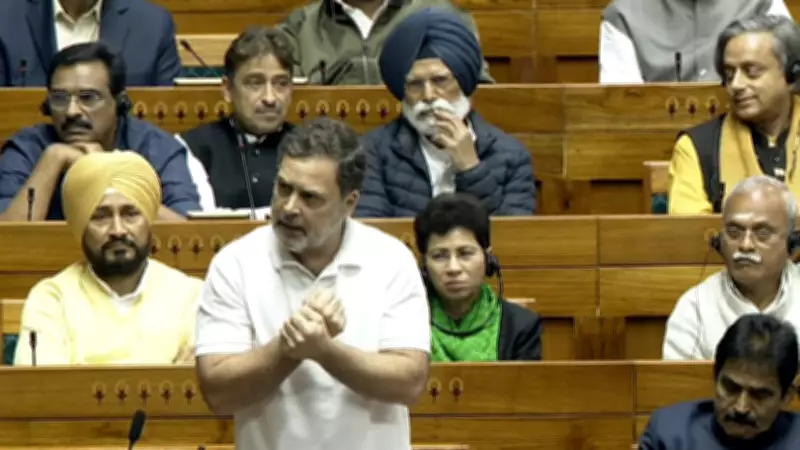
In a significant parliamentary intervention, Leader of the Opposition Rahul Gandhi delivered a speech in the Lok Sabha on Wednesday during the debate on the Union Budget. This address marked a strategic pivot for the Congress party, which has been grappling with recent setbacks in its political messaging efforts.
Setting a New Narrative Amidst Political Challenges
Following the Congress's unsuccessful attempt to build a political discourse around the Election Commission's Special Intensive Revision exercise and allegations of vote theft, Gandhi aimed to establish a fresh narrative for his beleaguered party. His speech focused heavily on the contentious India-US trade deal, which he vehemently criticized as a "sell-out" that compromises national interests.
Echoes of the Past: The Indo-US Nuclear Deal Resurfaces
Gandhi's remarks evoked strong memories of the political battles surrounding the India-US nuclear deal during the previous Congress-led UPA government's tenure. He accused Prime Minister Narendra Modi of bartering away India's sovereignty, drawing parallels to allegations once leveled by the BJP against the UPA. Specifically, Gandhi argued that India should have negotiated with the United States as an equal partner, rather than accepting what he described as a subservient position.

Historical Context: In a striking similarity, former LoP L.K. Advani had criticized the nuclear deal in 2008, calling for renegotiation to ensure strategic autonomy. Gandhi echoed this sentiment, stating that an INDIA alliance government would have insisted on equal footing in trade discussions.
Targeting Key Constituencies: Youth, Farmers, and Tech Workers
Gandhi's speech was carefully crafted to appeal to multiple voter groups. He tapped into widespread concerns within the software industry regarding rapid advancements in artificial intelligence and data governance. By highlighting issues like data localization and digital trade rules, he sought to resonate with middle-class youth aspiring to join the IT sector.
Additionally, he made a direct appeal to farmers and textile workers, warning that the trade deal could expose them to competition from mechanized American farms and harm domestic industries. Gandhi emphasized that energy security and agricultural protections were being undermined, accusing the government of failing to safeguard these critical sectors.
Allegations of Compromise and Foreign Pressure
In a bold move, Gandhi alleged that Prime Minister Modi is under immense pressure, citing factors such as a bribery case involving Adani in the US and unreleased Epstein files. He suggested that this pressure has compromised Modi's decision-making, leading to what he termed a "wholesale surrender" of India's future in the trade deal.
Key Quote: "I do not believe that any Indian PM including Mr Modi would sign such a deal unless there was a chokehold on him. This is surrender. This is a wholesale surrender... He has surrendered the future of 1.5 billion Indians."
Detailed Criticisms of the Trade Deal
Gandhi outlined specific grievances with the India-US trade agreement:
- Data and Digital Trade: He argued that India has relinquished control over digital trade rules, with no provisions for data localization, free data flow to the US, limits on digital taxes, or requirements to disclose source code.
- Tariffs and Imports: Gandhi claimed that average tariffs have risen from 3% to 18%, while US imports to India are set to increase dramatically from $46 billion to $146 billion.
- Energy Security: He criticized restrictions on purchasing oil from countries like Russia or Iran, asserting that the US would dictate India's energy choices.
Political Strategy and Future Implications
By focusing on these issues, Gandhi aims to position the Congress as a defender of national sovereignty and economic interests. His speech reflects a broader effort to galvanize support among youth, farmers, and tech professionals ahead of upcoming elections. The parallels drawn with past political debates suggest a calculated attempt to turn the tables on the BJP by using its own historical rhetoric against it.

As the political landscape evolves, Gandhi's address underscores the intensifying opposition to government policies and sets the stage for further confrontations in Parliament. The emphasis on equality in international relations and protection of domestic industries may resonate with voters concerned about globalization's impacts.





