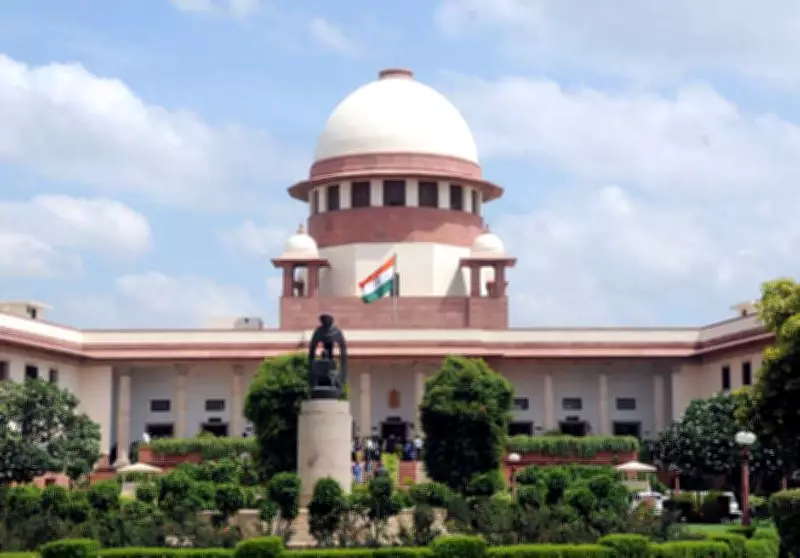
The Supreme Court of India is grappling with three vacancies even after the appointment of five new judges earlier this month, as two senior judges retired during the summer vacation. The top court’s sanctioned strength now stands at 38 judges, including the Chief Justice of India, but only 35 are in position.
Five Judges Appointed on June 2
On June 2, 2026, Chief Justice of India Surya Kant administered the oath of office to Justice Sheel Nagu, Justice Shree Chandrashekhar, Justice Sanjeev Sachdeva, Justice Arun Palli, and senior advocate V. Mohana. This raised the number of judges in the Supreme Court to 37 against a sanctioned strength of 38.
However, the retirement of Justice J.K. Maheshwari on June 28 and Justice Pankaj Mithal on June 16 has created two fresh vacancies, bringing the total number of vacant positions to three. Justice P.S. Narasimha is set to become a member of the Supreme Court Collegium following Justice Maheshwari’s retirement.

Ordinance to Increase Judge Strength
Last month, President Droupadi Murmu promulgated an Ordinance to increase the number of Supreme Court judges from 33 to 37, excluding the Chief Justice of India. The Supreme Court (Number of Judges) Amendment Ordinance 2026 was issued on May 16, amending Section 2 of the Supreme Court (Number of Judges) Act, 1956. This change raised the sanctioned strength to 38 judges, including the CJI.
The Union Cabinet had approved the proposal on May 5, 2026, and the government initially planned to introduce a bill in Parliament. However, since Parliament was not in session, the ordinance route was chosen to give immediate effect to the decision. According to the government, the increase will allow the Supreme Court to function more efficiently and ensure speedy justice.
Future Retirements and Collegium Action
Two more judges are scheduled to retire later this year: Justice Sanjay Karol on August 22 and Justice Satish Chandra Sharma on November 29. The Supreme Court Collegium, led by CJI Surya Kant, is expected to recommend names to fill the existing and anticipated vacancies soon.
As of May 31, 2026, the total pendency in the Supreme Court stood at 92,429 cases, a decrease of 394 cases from 92,823 in April 2026.
Historical Context of Judge Strength
The Supreme Court began in 1950 with only eight judges, including the CJI. The strength was first increased in 1956 to 11, then to 14 in 1960, 18 in 1977, 26 in 1986, and 31 in 2009. The last increase before the current one was in 2019, when the strength was raised from 31 to 33 judges (excluding the CJI).
According to Article 124(1) of the Constitution, the Supreme Court shall consist of a Chief Justice of India and, until Parliament by law prescribes a larger number, not more than seven other judges.