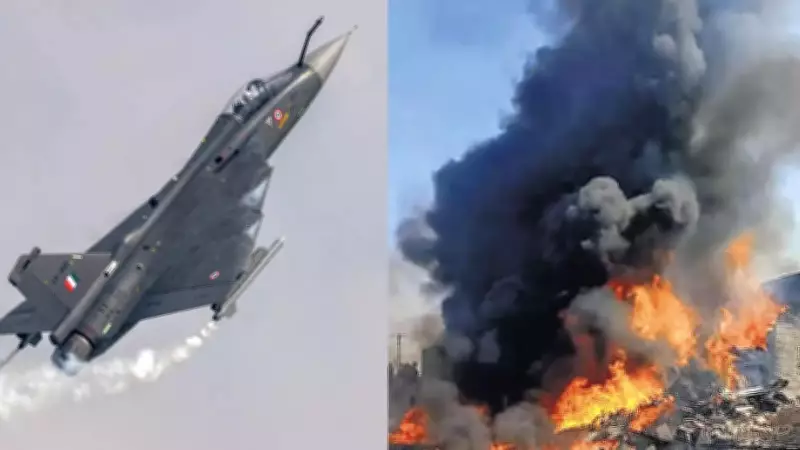
HAL Tejas Fighter Jet Fleet Temporarily Grounded Following Runway Overshoot Incident
India's ambitious indigenous fighter jet program has encountered significant turbulence as the HAL Tejas fleet faces temporary grounding following a serious operational incident. During a routine training sortie, a Tejas aircraft overshot the runway, forcing the pilot to execute an emergency ejection to ensure personal safety.
Technical Snag Triggers Fleet-Wide Safety Review
The incident has prompted immediate fleet-wide technical inspections and safety checks across all operational Tejas aircraft. Aviation authorities have implemented precautionary measures while investigators work to determine the exact cause of the runway overshoot. This development comes at a critical juncture for India's defense modernization efforts.
Despite this being the third significant incident involving the Tejas platform, aviation experts note that the aircraft maintains a comparatively clean safety record when measured against similar fighter jets globally. The temporary grounding represents standard safety protocol rather than an indication of fundamental design flaws.

Broader Implications for Indian Air Force Capabilities
The incident has reignited discussions about India's shrinking fighter squadron strength and the pressing need for accelerated modernization of aerial defense capabilities. With the Indian Air Force operating below its authorized squadron strength, every operational disruption carries amplified consequences for national security preparedness.
Production delays and manufacturing bottlenecks at Hindustan Aeronautics Limited (HAL) have further complicated the situation, creating challenges in maintaining operational readiness while simultaneously expanding the fleet. The Tejas program represents a cornerstone of India's defense indigenization strategy, making its operational reliability particularly significant.
Safety Protocols Versus Operational Requirements
Aviation safety experts emphasize that temporary groundings following incidents represent prudent safety management rather than crisis responses. Modern military aviation operates under stringent safety protocols that prioritize crew safety and thorough investigation over immediate operational continuity.
The real concern emerging from this incident extends beyond individual aircraft safety to encompass:
- Production rate challenges affecting fleet expansion
- Squadron strength deficiencies in the broader IAF structure
- Timelines for next-generation aircraft induction
- Balancing indigenous development with operational requirements
Defense analysts suggest that while the Tejas program has demonstrated technical competence, the broader ecosystem supporting India's fighter jet modernization requires accelerated development to meet evolving security challenges.
The incident serves as a reminder of the complex interplay between indigenous defense development, production scalability, and operational readiness that defines modern military aviation programs.