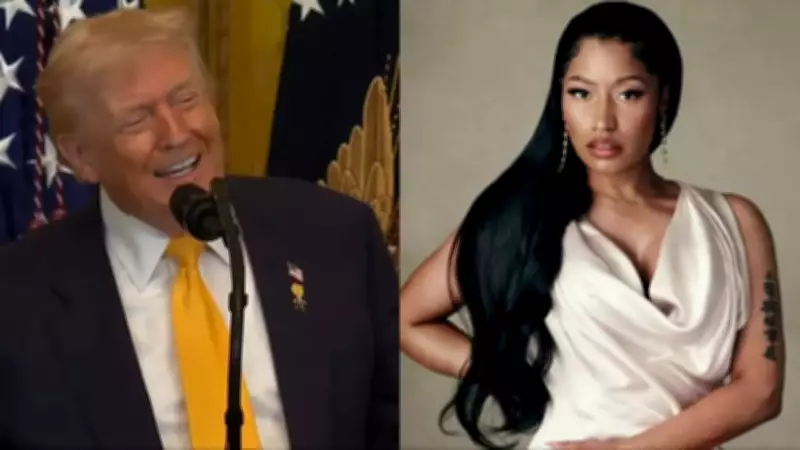
Trump's Unscripted Praise for Nicki Minaj's Appearance Dominates Black History Month Reception
During a formal White House reception commemorating the 100th anniversary of Black History Month, President Donald Trump created an unexpected viral moment by delivering unusually personal compliments about rapper Nicki Minaj's physical appearance. Standing in the historic East Room, Trump diverted from prepared remarks to express his admiration for the entertainer, stating emphatically, "I love Nicki Minaj."
The president continued with detailed observations about Minaj's appearance, noting "She was here a couple of weeks ago. She's so beautiful" and specifically commenting that "her skin's so beautiful." Trump even engaged in lighthearted banter about the length of Minaj's nails, asking whether they were "real" - a question the rapper reportedly "didn't want to get into" according to the president's account.
Political Alignment Between President and Pop Star
These personal remarks highlighted a broader pattern of mutual admiration that has developed between Trump and Minaj in recent weeks. The globally recognized artist has taken an unusually visible political stance by aligning herself with the Republican president, backing his initiatives including the "Trump Accounts" program and describing herself as potentially his "No. 1 fan" in various media appearances.

Trump has reciprocated this support by publicly praising Minaj as one of the most "successful" female rappers and mentioning her during multiple public appearances. This includes a January summit where Minaj appeared onstage and joked about growing long nails because of her influence, foreshadowing the conversation that would dominate the Black History Month event.
Viral Social Media Reactions and Cultural Commentary
The president's focus on Minaj's appearance during a formal historical observance quickly spread across social platforms, generating reactions ranging from amusement to disbelief. While Trump did mention legendary figures such as Muhammad Ali, Frederick Douglass, and Martin Luther King Jr. during the event, his extended commentary about a contemporary entertainer's beauty and manicure became the most shared segment of his speech.
Social media commentators highlighted the surreal nature of the moment, with many noting the oddness of the president fixating on physical details rather than maintaining focus on the historical theme of the occasion. The incident sparked broader conversations about:
- The blending of celebrity culture with national politics
- Traditional boundaries between entertainment and governance
- Messaging strategies during historically significant events
- The evolving landscape of American political identity
Broader Implications for Celebrity-Political Dynamics
This sequence of events feeds into a larger ongoing conversation about how politics and celebrity intersect in the digital age. Minaj's visible support for Trump, from the Trump Accounts Summit to optimistic social media posts, has sparked intense debate among fans, political commentators, and cultural observers about:
- The influence of major pop culture figures on political movements
- Voter engagement through celebrity endorsements
- The optics of blending personal praise with policy events
- How such alliances polarize public opinion
Trump's comments during a serious national observance raised questions about messaging strategy and whether such personal interactions enhance or detract from the significance of historical commemorations. The dynamic between the president and the rapper has made every interaction between them more newsworthy and more polarizing, reflecting deeper cultural shifts in how entertainment figures engage with political leadership.
The viral moment at the White House reception demonstrates how unexpected personal remarks can eclipse broader policy discussions, particularly when they involve high-profile celebrities who have taken visible political stances. As digital platforms amplify such interactions, they continue to reshape traditional narratives about both entertainment influence and political communication strategies.