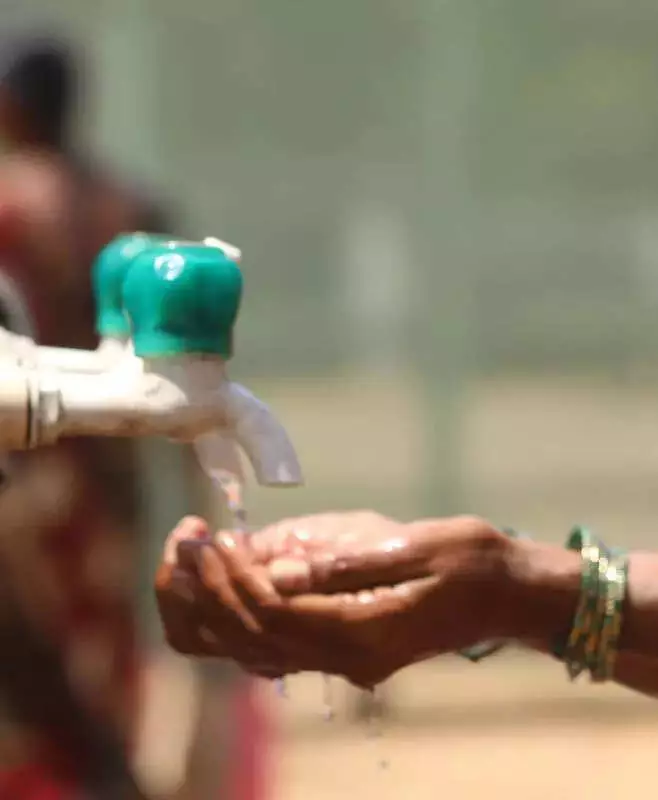
Himachal Pradesh has distinguished itself as one of India's leading states in providing household tap water connections, according to the latest 2024 assessment report by the Jal Jeevan Mission (JJM). The state's performance significantly outpaces the national average across several critical parameters, marking a major achievement in public utility provision.
State Soars Above National Benchmarks
The "Functionality assessment of household tap connections" report for 2024 presents a compelling picture of Himachal's success. At the national level, tap water availability is recorded at 98.1%. However, Himachal Pradesh has nearly achieved universal coverage, registering an impressive 99.9%. This near-total penetration places it among the top-performing states in the country.
The report's findings are based on a substantial survey covering 4,176 households across 348 villages in all 12 districts of the state. This extensive data collection forms a robust foundation for the assessment.

District-Wide Excellence and Standout Performers
A closer look at the district-level data reveals widespread success. Nine districts have achieved the remarkable milestone of 100% household tap water connections. These districts are Bilaspur, Chamba, Hamirpur, Kangra, Kinnaur, Kullu, Shimla, Sirmaur, and Una.
The remaining districts are not far behind. Mandi reported a coverage of 99.8%, while both Lahaul-Spiti and Solan stand at 99.6%.
Beyond mere connection numbers, the report assessed the functionality of these taps. Here, Himachal's performance is even more stellar. The availability of working tap connections in the state is 98.5%, which is far higher than the national average of 86.5%. Five districts—Chamba, Hamirpur, Kangra, Kinnaur, and Sirmaur—recorded a perfect 100% availability of working connections.
Quality, Regularity, and Quantity of Supply
The Jal Jeevan Mission's assessment goes beyond basic access to evaluate the actual service delivered to households. Himachal excels in these qualitative metrics as well.
The regularity of water supply in the state is 89.2%, exceeding the national average of 83.6%. Bilaspur district leads in this category with 99.3% regular supply. On the quantity of water supplied, Himachal has achieved 96.6% adequacy, considerably above the national average of 80.2%. Four districts—Hamirpur, Kangra, Kinnaur, and Sirmaur—recorded 100% adequacy in water quantity.
Perhaps most crucially, the quality of potable water supplied is a key highlight. Himachal registered 93.1% quality compliance, significantly higher than the national average of 76%. Bilaspur and Una districts recorded perfect 100% water quality scores.
A Model of Water Resource Management
The report also documented the state's diverse water sources, which include 9,127 surface water sources, 6,262 spring water sources, and 4,924 groundwater sources. This diversified sourcing likely contributes to the reliability and quality of the supply.
While the overall report is overwhelmingly positive, it also identifies areas for attention. For instance, Shimla district, despite having 100% coverage, reported the lowest regularity of supply in the state at 68.1% and the lowest functionality rate at 94.8%. Similarly, Kinnaur reported the lowest water quality compliance among districts at 86.7%.
Nevertheless, the comprehensive data positions Himachal Pradesh as a national leader in the Jal Jeevan Mission's objectives. The state's model of combining high coverage with strong functionality, regularity, and quality offers a benchmark for other regions in India striving to provide sustainable and safe tap water to every rural household.