

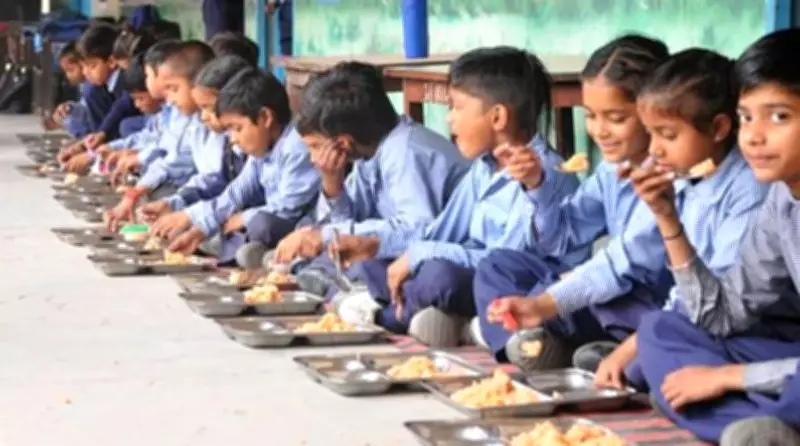
The Mid-Day Meal Workers Federation of India (MDMWFI) has condemned the West Bengal government's decision to remove eggs from mid-day meals in Kolkata's government and aided schools, calling it a 'religious fundamentalist imposition' that threatens the nutritional well-being of children and the livelihoods of thousands of workers.
Key Criticisms and Allegations
In a statement issued on Friday, the MDMWFI accused the state government of partnering with the International Society for Krishna Consciousness (ISKCON) — described as a 'corporate NGO' — to implement the PM-POSHAN scheme. The federation alleged that ISKCON is 'notorious' for religious impositions, substandard food, and financial misappropriation. The move to centralised kitchens, it argued, undermines the scheme's core objective of providing freshly cooked, locally available food to address classroom hunger and malnutrition.
The federation also pointed out a contradiction: 'It is shocking that the BJP — which was vouching for non-vegetarian food in West Bengal and publicly eating meat before elections — is now engaging ISKCON to promote satvik food among Bengalis by abandoning eggs in mid-day meals.'

Job Losses and Nutritional Impact
According to the MDMWFI, the decision will lead to the retrenchment of nearly 4,000 mid-day meal workers in Kolkata, for whom the scheme provides their only income. The workers' body argued that handing the scheme over to NGOs amounts to privatisation and will result in job losses for lakhs of cook-cum-helpers across the state.
The federation cited data showing that in 2024-25, while 1.13 crore children were enrolled in the scheme, only 77.9 lakh (about 69%) actually received meals. It warned that removing eggs — a culturally familiar and crucial source of protein — would worsen malnutrition and reduce school attendance, as meals are often an incentive for children to attend school.
ISKCON's Controversial Role
The MDMWFI highlighted that ISKCON's Akshayapatra Foundation, which operates over 52 kitchens across 21 states, refuses to serve not only eggs but also onions and garlic on religious grounds. The federation claimed the foundation faces mounting allegations of impropriety, and civil society groups have demanded the cancellation of all its contracts pending investigation into misuse of government funds and Foreign Contribution (Regulation) Act (FCRA) violations.
Political and Social Backlash
The opposition Trinamool Congress (TMC) and various teachers' associations have also criticised the move. They argue that eggs are essential for combating malnutrition and are a familiar dietary item for Bengali children. The MDMWFI noted that mid-day meal workers' movements under CITU have previously forced state governments in Andhra Pradesh, Telangana, Karnataka, and Assam to withdraw similar contracts with ISKCON.
Demands and Broader Concerns
The MDMWFI reiterated its demands: strengthening the school mid-day meal scheme to cover all children up to Class 12, adequate financial allocation for nutritious locally cooked meals including eggs, fish, and meat, and minimum wages and social security for workers. 'Mid-day meal is not charity. It is a legal right of every child,' the federation stated. 'Turning it into a vehicle for a corporate-sponsored religious outfit in centralised kitchens will affect workers' jobs, children's nutritional status, and the secular values of the nation.'






