

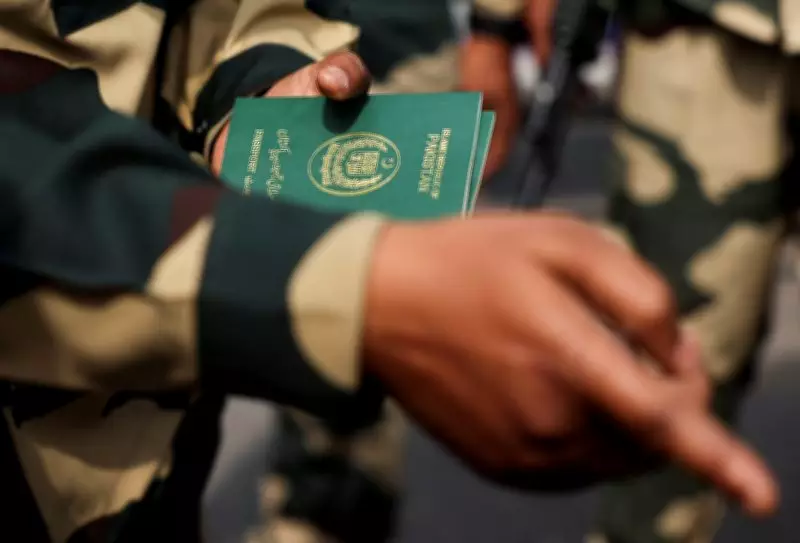
The Ministry of External Affairs (MEA) has clarified that a passport is not conclusive proof of Indian citizenship, a statement that has ignited political and legal debate. While opposition leaders have criticized the rationale, the government maintains that this is neither a new policy nor a recent interpretation. According to the Passport Act of 1967, a passport can be issued to non-citizens in special cases, and judicial verdicts have affirmed that it is primarily a travel document.
Legal Nuances and Practical Anomalies
The issue goes beyond legal technicalities. A passport is one of the most rigorously verified documents issued by the government, requiring extensive documentation, identity checks, and police verification. Therefore, the assertion that it cannot conclusively establish citizenship appears anomalous. The disconnect lies in the distinction between evidence of citizenship and its absolute proof.
Indian law does not have a universally recognized citizenship certificate. Citizenship may be acquired through birth, descent, registration, naturalization, or incorporation of territory under the Citizenship Act of 1955. Consequently, citizenship is often established through a combination of records rather than a single document. A passport, voter ID, Aadhaar card, PAN card, or birth certificate may each support a citizenship claim, but none is legally unassailable in every circumstance.

Context of Electoral Roll Revision
The controversy comes amid the Special Intensive Revision of electoral rolls and citizenship verification exercises. The question arises: what document ultimately proves citizenship? The government’s answer is that citizenship is determined by law and supporting evidence, not by possession of any one document. However, this stand poses a policy challenge.
In a democracy, citizenship is the foundation of voting rights, constitutional protections, and political participation. Reliance on a patchwork of documents can leave citizens uncertain about their status. The debate should move beyond whether a passport proves citizenship and focus instead on the need for a clear, transparent framework to establish an individual’s status as a citizen.
Need for a Clear Framework
Experts argue that the current ambiguity undermines the integrity of citizenship verification processes. A standardized citizenship certificate or a centralized database could resolve the confusion. The MEA’s clarification, while legally accurate, highlights the gap between administrative practice and legal reality. As the government pursues citizenship verification exercises, establishing a definitive proof of citizenship becomes imperative to safeguard the rights of genuine citizens.






