

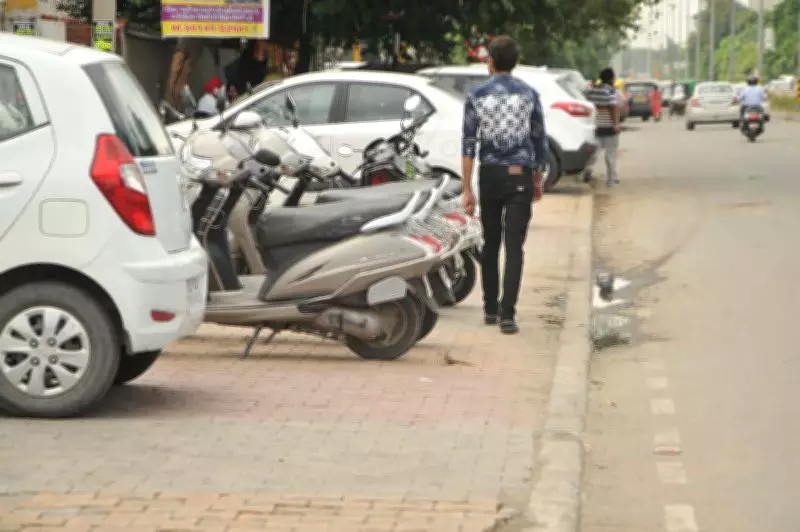
The Supreme Court of India has declared that the right to walk on demarcated footpaths is a fundamental right of citizens, covered under the right to life and the right to free movement. The Court observed, "If a road exists, there must then be a duty to ensure that a footpath is maintained for walkers." This landmark ruling places the obligation on urban development agencies, municipalities, and panchayats to demarcate, construct, maintain, and safeguard footpaths for pedestrians.
Timely Ruling Amidst Pro-Motor Vehicle Policies
The ruling is timely and welcome, coming at a time when public policies are heavily geared towards developing urban infrastructure for motorised transport—city roads, highways, flyovers, and subways—often projected as symbols of development. In contrast, creating or improving pedestrian infrastructure is not considered headline-grabbing work. Existing footpaths in Indian cities are hardly walkable; they are broken, obstructed, ill-designed, unfriendly to the elderly, and generally unsafe, as shown by numerous walkability surveys conducted by government agencies and civil society groups.
Faulty Policies and Lack of Dedicated Planning
Faulty public policies are to blame for the sorry state of footpaths. The National Urban Transport Policy adopted in 2006 declared that "people occupy centre stage in our cities and all plans would be for their common benefit and well-being." However, subsequent actions, urban programmes, and investments have given primacy to motorised transport. Policies continue to address the demand for more road space for personal vehicles and parking spaces, often encroaching upon space meant for walking, forcing more people to prefer motor vehicles even for accessing public transport.

The key reason for apathy towards walkers is the lack of dedicated policies to promote walking at national, state, and city levels. Hardly any Indian city has a walkability plan or a pedestrian policy. Without specific policies, there are no agencies specifically in charge of footpaths or budgetary allocations for pedestrian infrastructure. State agencies like the Roads and Bridges Department, which construct roads, regard developing and maintaining footpaths as the responsibility of the city corporation, and vice versa.
Multiple Agencies and Misaligned Planning
Urban transport involves multiple agencies working at cross-purposes or blaming each other. There are no policy and programmatic linkages between transport planning and walkability. Long-term city master plans often overlook walkability requirements while suggesting high capital-intensive transport plans. Even when funds are allocated, they are used for constructing badly designed and fancy-looking overhead crossings or foot overbridges. Wherever pedestrian infrastructure is developed, it is designed with the mindset of car or two-wheeler users. Pedestrians need not traverse the same linear path or take the long routes taken by motor vehicles. For instance, a short pedestrian pathway can be designed to connect two adjoining localities instead of forcing walkers to take the same route as motor vehicles.
Walking: Good for Health and Climate
Walking is not just a fundamental right but also beneficial for human and planetary health. The World Health Organisation (WHO) has advocated the health benefits of walking for years. Physical inactivity and a sedentary lifestyle are key risk factors for non-communicable diseases like diabetes, hypertension, heart disease, stroke, and cancer. The WHO prescribes 20-30 minutes of brisk walking, along with cycling, as the best way to remain physically active. Investing in policies to promote walking can contribute directly to achieving many of the 2030 Sustainable Development Goals (SDGs). The health agency recommends policy actions to enable and promote walking, cycling, and the use of public transport based on principles of safe, universal, and equitable access for people of all ages and abilities.

Walking is also a form of climate action. A study by the Institute for Transport and Development Policy showed that improved footpaths and walking infrastructure are a cost-effective means to mitigate greenhouse gas emissions, besides improving public health and saving money for residents. The study, conducted in Chennai, found that 4,200-12,000 tonnes of carbon dioxide-equivalent greenhouse gas emissions were prevented annually due to improvements in footpaths. This was equivalent to taking 1,000-2,900 cars off the road for one year.
Addressing Encroachment by Vendors
In every discussion on footpaths, the question of encroachment by vendors arises. The Supreme Court and the government have dealt with this issue in the past. The Court observed that pedestrians and vendors can co-exist if vending is properly regulated. Vendors make available vegetables, fruits, and other items of daily use that people can buy while walking to work or home. The 2004 National Policy on Urban Street Vendors (amended in 2009) proposed creating three zones—restriction-free vending, restricted vending, and no-vending on footpaths—considering factors such as traffic congestion and demand patterns. In addition to street vendors, footpaths are also encroached upon by shopkeepers as an extension of their shops and by homeowners for parking and developing gardens on public spaces in residential colonies.
Opportunity for Policy Review
The Supreme Court ruling provides an opportunity to review policies and programmes concerning footpaths and plug the gaps to ensure fair use of road space. The creation and maintenance of pedestrian and cycling infrastructure should receive top priority in Indian cities, towns, and villages along national highways. It is a matter of public safety, public health, climate, and equity.





