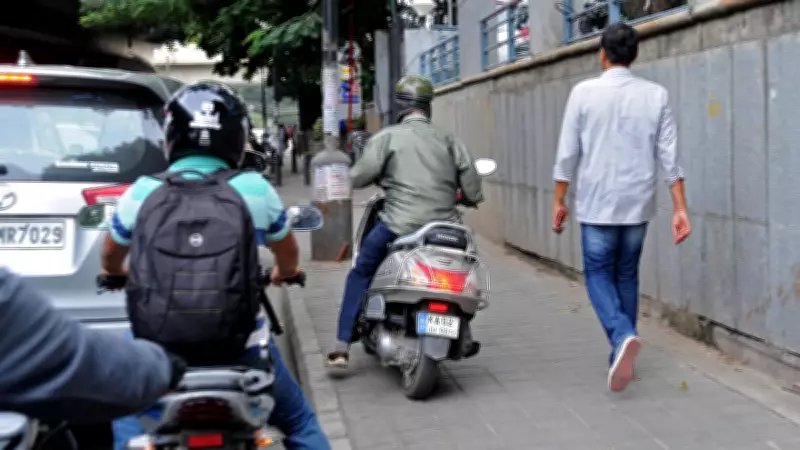
The Supreme Court of India has declared that the right to walk on footpaths is 'primary' and must take precedence over vehicular movement. The court underscored that if a road exists, there is a corresponding duty on urban development authorities, municipal corporations, municipalities and panchayats to demarcate, construct, maintain and safeguard footpaths and pedestrian infrastructure.
Landmark Judgment Prioritizes Pedestrians
In a significant ruling, the Supreme Court emphasized that footpaths are meant exclusively for pedestrians and cannot be encroached upon or used for parking or other purposes. The bench observed that the right to walk safely is a fundamental aspect of the right to life under Article 21 of the Constitution.
Obligations on Authorities
The court directed all urban local bodies to ensure that footpaths are accessible, well-maintained, and free from obstructions. It also mandated the creation of a pedestrian-friendly environment, including proper lighting, signage, and crossings.

The judgment came on a petition highlighting the sorry state of footpaths in Indian cities, which are often broken, encroached upon, or non-existent. The court noted that pedestrians, especially the elderly, women, and children, face severe hardships due to the lack of safe walking spaces.
Implementation and Monitoring
The Supreme Court has asked state governments to submit compliance reports within three months. It also suggested the formation of a dedicated pedestrian safety cell in each municipality to monitor the implementation of footpath-related projects.
This ruling is expected to bring about a paradigm shift in urban planning, placing pedestrian needs at the core of infrastructure development.