

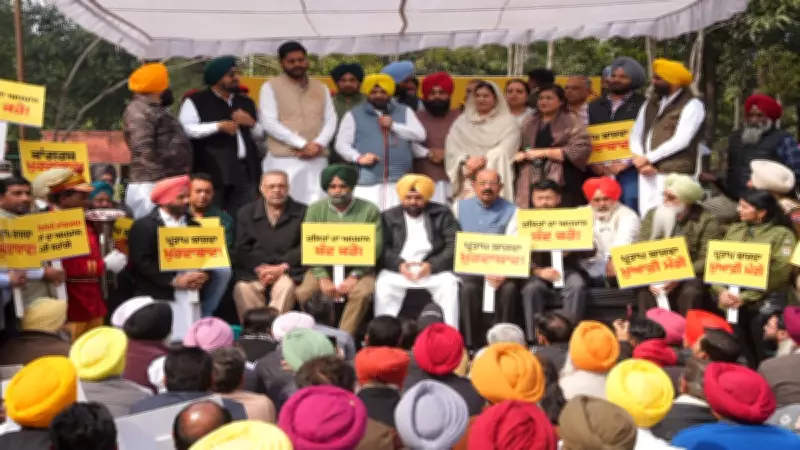
AAP Demands Public Apology from Punjab Congress Over Alleged Anti-Dalit Remarks
The political atmosphere in Punjab has intensified as the Aam Aadmi Party (AAP) launched a sharp attack on the Congress, accusing its state leaders of harboring an anti-Dalit mindset. The controversy stems from recent remarks made by senior Congress figures, prompting AAP to demand an immediate and public apology.
Controversial Comments Spark Outrage
According to reports, Congress leaders Raja Warring and Pratap Singh Bajwa made statements that AAP has labeled as derogatory and insensitive towards the Dalit community. While the exact nature of the comments has not been fully detailed in public discourse, AAP representatives have condemned them as reflective of a deeper prejudice within the Congress party's leadership in Punjab.
The AAP has emphasized that such remarks are not only offensive but also undermine the social harmony and dignity of marginalized groups in the state. This incident has reignited debates over caste-based politics and the treatment of Dalits in Punjab's political landscape.

AAP's Firm Stand and Demands
In response to the controversy, AAP leaders have taken a firm stance, calling for accountability from the Congress. They have publicly demanded that:
- Congress leaders Raja Warring and Pratap Bajwa issue a formal public apology for their remarks.
- The Congress party as a whole distance itself from such statements and reaffirm its commitment to social justice.
- There be a broader discussion on eradicating caste-based discrimination in political rhetoric.
This demand for an apology is seen as a strategic move by AAP to highlight what they perceive as hypocrisy in the Congress's claims of being a pro-Dalit party. By putting pressure on their political rivals, AAP aims to strengthen its own image as a champion of marginalized communities.
Political Implications in Punjab
The timing of this controversy is significant, as it comes amid ongoing political realignments and preparations for future elections in Punjab. The state has a substantial Dalit population, making this issue particularly sensitive and potentially influential in shaping public opinion.
Analysts suggest that AAP's aggressive posture could help them consolidate support among Dalit voters, who have historically been a key demographic in Punjab's electoral politics. Conversely, the Congress faces the challenge of damage control, as any perception of an anti-Dalit stance could alienate a crucial voter base.
This incident underscores the volatile nature of caste politics in India, where remarks by leaders can quickly escalate into major political controversies. Both parties are likely to use this issue to rally their supporters and critique their opponents in the coming days.
As the situation develops, all eyes are on the Congress's response and whether they will heed AAP's demands for an apology. The outcome could have lasting effects on inter-party dynamics and social cohesion in Punjab.






