

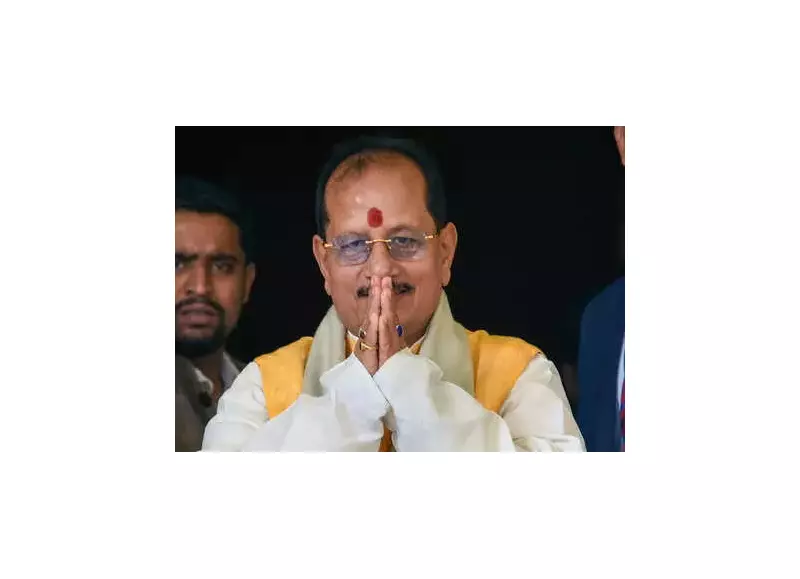
In a significant move aimed at transforming its urban landscape, Bihar's leadership has initiated a direct dialogue with Gujarat to study and implement its acclaimed development framework. The state's Deputy Chief Minister, Vijay Kumar Sinha, who also oversees the Urban Development and Housing Department (UDHD), held a crucial meeting with Gujarat's UDHD Minister, Kannubhai Mohanlal Desai, on Thursday in Gandhinagar.
Cross-State Collaboration for Modern Infrastructure
The core agenda of the discussion was to explore how elements of the highly successful Gujarat model could be adapted to accelerate urban development in Bihar. This model is renowned for its effective execution in creating smart cities, ensuring rapid infrastructure growth, and implementing citizen-centric urban planning. The meeting signifies a concrete step towards fulfilling Sinha's announcement, made just weeks prior, about Bihar's intent to actively study and replicate Gujarat's urban reforms.
The interaction took place on the sidelines of the ongoing three-day 'Rashtriya Khanij Chintan Shivir-2026' (National Mineral Deliberation Camp), which is being held from January 8 to 10. Organized by the Union Ministry of Mines in Gandhinagar, the event saw the presence of Union Minister G Kishan Reddy, Gujarat Chief Minister Bhupendra Patel, and numerous ministers and officials from various states, focusing on sustainable mining and mineral self-reliance.

Key Focus Areas and Future Implications
During the meeting, Deputy CM Sinha presented Minister Desai with a traditional shawl and bouquet as a gesture of goodwill while gaining first-hand insights into the mechanisms behind Gujarat's rapid urban progress. The collaboration is set to focus on several critical areas for Bihar's growth:
- Smart city initiatives and digital integration.
- Robust and reliable water supply systems.
- Efficiency improvements in municipal governance.
This initiative underscores a broader push for inter-state learning in India, where proven strategies from economically advanced states are adopted by others seeking accelerated development. For Bihar, this partnership could potentially lead to enhanced urban infrastructure, more effective planning, and sustained economic growth, marking a pivotal shift in its approach to building modern cities.
The move is widely seen as a strategic effort to bridge the urban development gap by leveraging expertise and tried-and-tested models, setting a new precedent for cooperative federalism in India's infrastructural advancement.






