

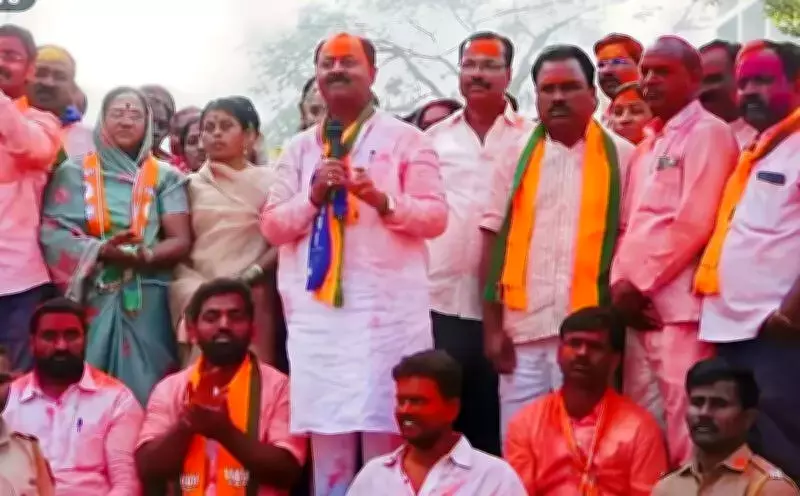
BJP Achieves Clean Sweep in Barshi Tehsil, Crushing Opposition Alliance
The much-publicized 'Maha Aghadi' experiment in Maharashtra's Solapur district has ended in a comprehensive defeat for the opposition coalition. In the recently concluded zilla parishad and panchayat samiti elections for Barshi tehsil, the Bharatiya Janata Party (BJP) swept all nine ZP seats, dealing a significant blow to the alliance of non-BJP parties that had united to challenge the ruling party's dominance.
The Maha Aghadi Alliance Formation and Strategy
The alliance was spearheaded by local MLA and former minister Dilip Sopal, a seven-term legislator from the Shiv Sena (UBT). In an unprecedented move, Sopal managed to bring together Shiv Sena (UBT), Shiv Sena, Nationalist Congress Party (NCP), and NCP (SP) under a single banner to contest against the BJP. The coalition drew statewide attention, with Maharashtra Deputy Chief Minister Eknath Shinde even addressing a campaign rally for the alliance's candidates.
The seat-sharing arrangement was carefully negotiated, with each party contesting on its own symbol while presenting a united front against the BJP. This experiment was seen as a potential blueprint for opposition unity in future elections across Maharashtra.

BJP's Overwhelming Victory and Development Narrative
Despite the opposition's concerted efforts, the BJP achieved a complete electoral sweep, winning not only all nine ZP seats but also securing 18 panchayat samiti seats in Barshi tehsil. This victory pushed the BJP's overall tally in Solapur district past 40 seats, giving the party a commanding majority of 68 seats in the local governing bodies.
Former BJP MLA Rajendra Raut, who led the party's campaign in the tehsil, attributed the victory to the BJP's development-focused governance. "Our leadership has maintained a consistent focus on addressing the development needs of Barshi tehsil," Raut stated. "With support from BJP leadership at both the state and central levels, we have secured approximately Rs 5,000 crore for development projects in recent years."
Raut, who had lost to Sopal in the previous assembly election, emphasized that the BJP's earlier victories in market committee and nagar parishad elections had established a pattern of public trust that continued in these polls.
Political Maneuvering and Its Limited Impact
During the campaign, Deputy Chief Minister Shinde made several significant gestures that highlighted the political tensions surrounding the election. Shinde indirectly invited Dilip Sopal to join the Shiv Sena, suggesting the possibility of a cabinet berth if he switched allegiance. Additionally, immediately after addressing the campaign rally, Shinde sanctioned Rs 5 crore for development works in Barshi Nagar Parishad, taking advantage of the fact that the election code of conduct did not apply to those specific projects.
However, these political overtures and financial allocations failed to sway the electoral outcome. The results demonstrated that the BJP's organizational strength and development narrative resonated more strongly with voters than the opposition's alliance-building efforts or last-minute political maneuvers.
The comprehensive defeat of the Maha Aghadi experiment in Barshi tehsil represents a significant setback for opposition unity efforts in Maharashtra. It underscores the BJP's continued electoral dominance in the region and raises questions about the effectiveness of alliance politics against the ruling party's well-established organizational machinery and development-focused campaign strategy.






