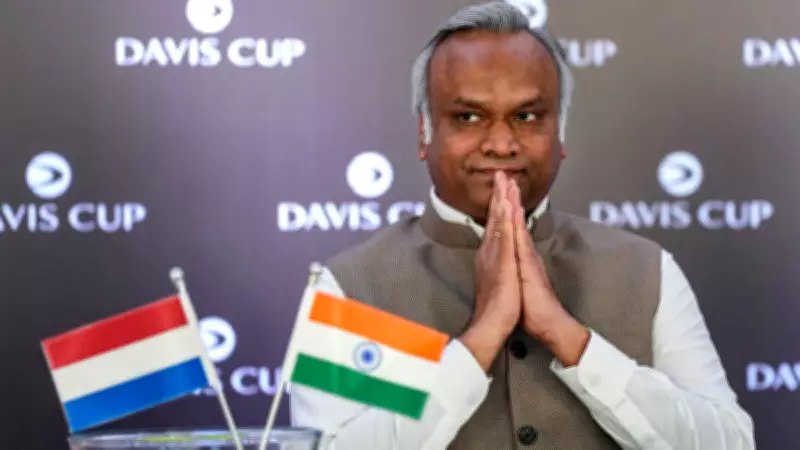
Karnataka Minister Priyank Kharge's Fiery Attack on RSS and BJP
In a bold and provocative statement that has sent shockwaves through the political landscape of Karnataka, state minister Priyank Kharge launched a sharp verbal assault on the Rashtriya Swayamsevak Sangh (RSS) and the Bharatiya Janata Party (BJP). The minister, known for his outspoken views, did not mince words as he labeled the RSS as 'Satan' and described the BJP as merely its 'shadow'. This inflammatory rhetoric has ignited a fresh wave of controversy, further polarizing the already tense political environment in the state.
Escalating Political Tensions in Karnataka
The remarks by Priyank Kharge come at a time when Karnataka is witnessing heightened political friction between the ruling Congress party and the opposition BJP. His comments are seen as a direct challenge to the ideological foundations of the RSS, which is widely regarded as the parent organization of the BJP. By using such strong language, Kharge has not only criticized the BJP's policies but has also questioned the very ethos of the RSS, accusing it of promoting divisive agendas that undermine social harmony.
This verbal onslaught is expected to have significant repercussions, potentially leading to heated debates and counter-attacks from BJP leaders. The BJP has historically defended the RSS, and such a direct attack is likely to provoke a robust response, further fueling the political animosity in Karnataka. The state has been a battleground for ideological clashes, and Kharge's statements add fuel to the fire, making it a focal point for national political discourse.

Context and Implications of the Controversy
Priyank Kharge, a prominent figure in the Karnataka Congress, has been vocal in his criticism of the BJP and its affiliates. His latest comments are part of a broader strategy to counter the BJP's influence in the state, especially ahead of upcoming elections. By targeting the RSS, he aims to highlight what he perceives as its negative role in Indian politics, accusing it of fostering intolerance and undermining democratic values.
The use of terms like 'Satan' and 'shadow' is particularly significant, as it frames the RSS as a malevolent force and the BJP as its passive follower. This narrative could resonate with certain voter segments, potentially swaying public opinion against the BJP. However, it also risks alienating others who view the RSS as a cultural and social organization, leading to a polarized electorate.
As the controversy unfolds, political analysts are closely watching how this will impact the dynamics in Karnataka. The state has been a key battleground in national politics, and such high-voltage statements could influence voter sentiment and party strategies. The Congress party may use this to rally its base, while the BJP might leverage it to consolidate its support among RSS sympathizers.
Broader Political Ramifications
Beyond Karnataka, Priyank Kharge's remarks have the potential to reverberate across the country, given the national prominence of the RSS and BJP. They could spark debates on freedom of speech, political decorum, and the role of ideological organizations in a democracy. The incident underscores the deep ideological divides in Indian politics, where rhetoric often escalates into personal and organizational attacks.
In conclusion, Priyank Kharge's sharp criticism of the RSS and BJP marks a significant escalation in Karnataka's political warfare. As both sides prepare for a protracted battle, the state's political future hangs in the balance, with such controversies likely to shape the upcoming electoral contests and define the narrative for years to come.