

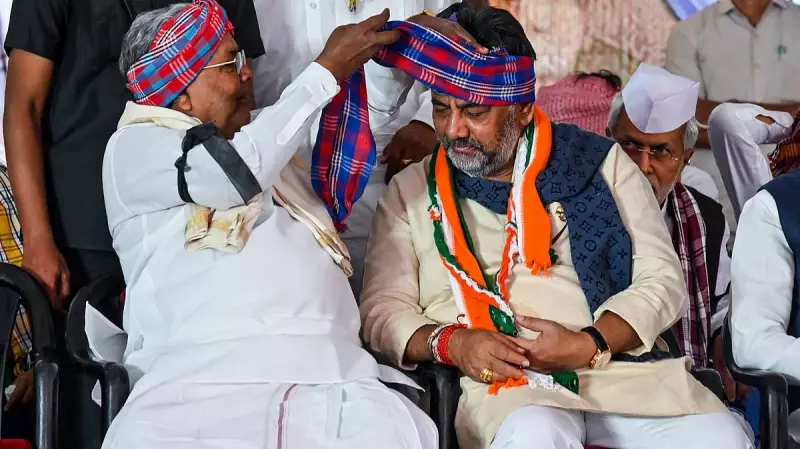
Karnataka Government to Rename All Gram Panchayats After Mahatma Gandhi
In a significant move to honor the Father of the Nation, Karnataka Chief Minister Siddaramaiah has announced that all 6,000 Gram Panchayats (GPs) across the state will be named after Mahatma Gandhi. This decision underscores the state government's commitment to preserving Gandhi's legacy and promoting his principles of non-violence and rural development.
Congress Leaders Protest MGNREGA Scrapping
The announcement was made during a high-profile protest against the central government's proposed scrapping of the Mahatma Gandhi National Rural Employment Guarantee Act (MGNREGA). A delegation of Congress leaders, led by Chief Minister Siddaramaiah, Deputy Chief Minister, and senior leader Surjewala, rode a Bangalore Metropolitan Transport Corporation (BMTC) bus to Lok Bhavan to submit a memorandum to Governor Thaawarchand Gehlot.
The memorandum strongly opposed the discontinuation of MGNREGA, highlighting its critical role in providing employment and supporting rural livelihoods in Karnataka. The leaders argued that the scheme is essential for economic stability and social welfare in the state's villages.

Symbolic Gesture Amidst Political Tensions
Renaming the Gram Panchayats after Mahatma Gandhi is seen as a symbolic gesture by the Congress-led state government to reinforce its dedication to Gandhian values, especially in the context of ongoing disputes with the central administration over key policies like MGNREGA. This move aims to connect local governance with the ideals of self-reliance and community service championed by Gandhi.
The implementation of this renaming initiative is expected to involve extensive administrative processes, including updates to official records and signage across Karnataka's rural areas. It reflects a broader effort to integrate Gandhi's teachings into the fabric of local self-governance.
As this development unfolds, it highlights the intersection of political advocacy and cultural homage in Karnataka's governance landscape.






