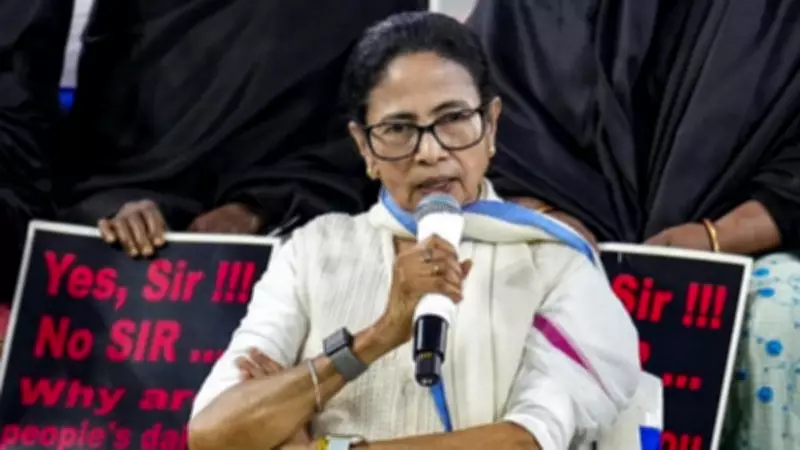
Mamata Banerjee Declares Support for CEC Impeachment Motion, Sets Solo Course for State Polls
In a significant political development, West Bengal Chief Minister Mamata Banerjee has announced her party's readiness to support a motion for the impeachment of the Chief Election Commissioner (CEC) if such a proposal is brought forward. This statement, made on February 3, 2026, underscores the escalating tensions between regional parties and central institutions ahead of crucial state elections.
Firm Stance on Electoral Integrity and Institutional Accountability
Mamata Banerjee's declaration highlights her concerns regarding the functioning of the Election Commission, which she implied has been compromised. By expressing support for impeachment proceedings, she positions herself as a champion of electoral fairness and institutional accountability. This move is seen as a direct challenge to the perceived influence of the ruling BJP over constitutional bodies, aiming to galvanize opposition forces around issues of democratic norms.
TMC to Contest State Elections Independently, Dares BJP to Face Direct Challenge
Simultaneously, the West Bengal Chief Minister made it unequivocally clear that her party, the Trinamool Congress (TMC), will fight the upcoming state polls alone, without forming any alliances. This strategic decision reflects her confidence in the TMC's grassroots strength and popularity in Bengal. She further challenged the Bharatiya Janata Party (BJP) to confront them directly in the electoral arena, rather than relying on what she described as the 'use' of the Election Commission to gain an unfair advantage.

Banerjee's dual announcements serve multiple political objectives:
- Reinforcing her image as a bold leader willing to take on central authorities and defend regional interests.
- Mobilizing the TMC's voter base by framing the election as a battle against external interference and for Bengal's autonomy.
- Putting pressure on the BJP to engage in a fair contest, thereby shifting the narrative from institutional controversies to direct political competition.
The implications of these statements are far-reaching, potentially influencing the dynamics of the state elections and broader national politics. As the political landscape heats up, all eyes will be on how these developments unfold in the coming months.