Political Firestorm Erupts Over Historical Comparison in Maharashtra
A major controversy has engulfed Maharashtra's political landscape following inflammatory remarks made by the state's Congress president, Nana Patole. The situation escalated dramatically when a shocking bounty of Rs 10 lakh was publicly announced by a local leader, targeting Patole's tongue in retaliation for his statements.
The Provocative Remarks That Sparked Outrage
During a recent public address, Nana Patole drew a direct comparison between the revered Maratha warrior king, Chhatrapati Shivaji Maharaj, and the 18th-century Mysore ruler, Tipu Sultan. This analogy has been met with fierce condemnation from various political factions and social groups across the state, who view Shivaji Maharaj as an iconic symbol of Maratha pride and Hindu resistance.
The controversial statement suggested parallels in their governance styles, which many interpret as an attempt to equate the two historical figures. Critics argue that such a comparison is historically inaccurate and deeply disrespectful to the legacy of Shivaji Maharaj, who is celebrated for establishing a progressive Hindu kingdom in the face of Mughal expansion.

Escalation to Threats and Legal Action
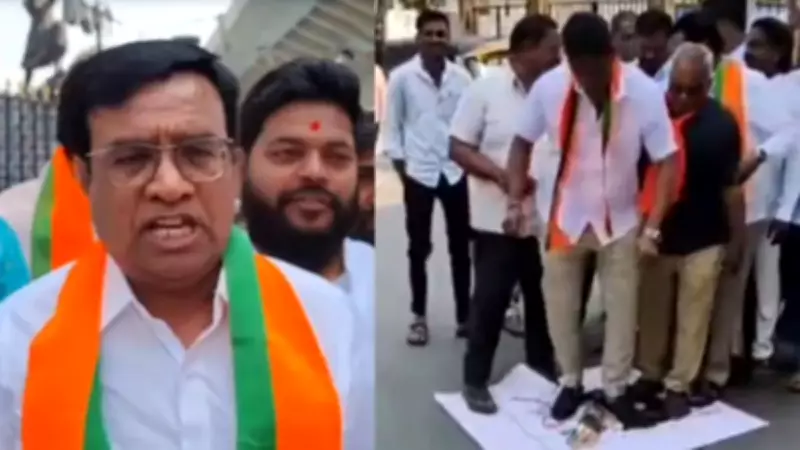
The political rhetoric quickly turned violent when a local leader from the Sambhaji Brigade, an organization named after Shivaji Maharaj's son, announced a bounty of Rs 10 lakh for anyone who would cut off Nana Patole's tongue. This extreme threat has been widely denounced as unacceptable and criminal, prompting immediate legal scrutiny.
Law enforcement authorities have registered a formal complaint against the individual who issued the bounty, citing sections related to criminal intimidation and incitement to violence. The police have assured the public that necessary security measures are being implemented to ensure Patole's safety, while also investigating the broader context of the inflammatory statements.
Broader Political Repercussions and Public Reaction
The incident has ignited a fierce debate about historical narratives, political discourse, and the limits of free speech in India. Key political developments include:
- Strong condemnation from the ruling Bharatiya Janata Party (BJP) and its allies, who accuse the Congress of deliberately distorting history to appease certain vote banks.
- Defensive posturing from Congress officials, who claim Patole's comments were misinterpreted and taken out of context, while also criticizing the violent response as undemocratic.
- Widespread protests by Maratha community organizations and Hindu nationalist groups, demanding an unconditional apology from Patole and legal action against him for hurting religious sentiments.
- Calls for calm from civil society activists, who emphasize the need for respectful dialogue and adherence to legal frameworks in resolving such disputes.
This controversy underscores the volatile intersection of history, identity, and politics in Maharashtra, a state with a rich and often contentious historical legacy. The use of financial incentives for physical harm represents a dangerous escalation in political rivalry, raising serious concerns about the erosion of democratic norms and the potential for communal tension.
As investigations proceed, all eyes are on how the state government and central authorities will navigate this sensitive issue, balancing the right to free expression with the imperative to maintain public order and communal harmony. The outcome may set important precedents for handling similar disputes in India's increasingly polarized political environment.