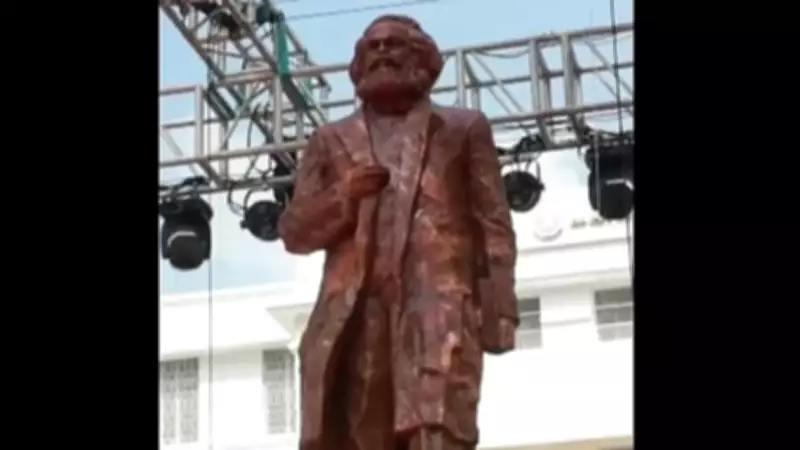
Tamil Nadu Chief Minister M.K. Stalin Unveils Statue of Karl Marx in Chennai
In a significant event highlighting the state's ideological commitments, Tamil Nadu Chief Minister M.K. Stalin unveiled a statue of Karl Marx in Chennai. The ceremony, held at a prominent public location, drew attention to the enduring influence of Marxist thought in regional politics and governance.
Ceremony Details and Political Significance
The unveiling took place in Chennai, with Chief Minister Stalin presiding over the event. He emphasized the relevance of Karl Marx's philosophies in contemporary society, particularly in addressing social inequalities and promoting equitable development. This move is seen as a reaffirmation of the Dravida Munnetra Kazhagam (DMK) party's socialist roots and its commitment to progressive policies.
Historical and Cultural Context: Karl Marx, the 19th-century philosopher and economist, is widely regarded as a foundational figure in socialist and communist movements globally. In Tamil Nadu, his ideas have historically influenced political discourse, with the DMK often incorporating elements of social justice and anti-casteism into its platform. The statue serves as a symbolic gesture, aligning the state's governance with these principles.

Public and Political Reactions
The event garnered mixed reactions from various quarters. Supporters praised the move as a tribute to intellectual heritage and a step towards fostering inclusive growth. Critics, however, questioned the allocation of resources for such symbolic acts, suggesting a focus on more tangible developmental projects. Despite this, the unveiling has sparked discussions on the role of ideology in shaping public policy in India.
Impact on Local Governance: Chief Minister Stalin, in his speech, linked the unveiling to ongoing efforts in Tamil Nadu to implement welfare schemes and reduce economic disparities. He highlighted initiatives such as healthcare reforms and educational programs that reflect Marxist ideals of social welfare. This connection underscores how symbolic acts can reinforce policy directions and public messaging.
Broader Implications for Indian Politics
This event is part of a larger trend in Indian politics where regional parties emphasize ideological symbols to distinguish their governance models. By unveiling a statue of Karl Marx, Tamil Nadu positions itself as a state championing socialist values, potentially influencing political narratives at the national level. It also reflects the DMK's strategy to consolidate its voter base by appealing to historical and ideological sentiments.
Future Outlook: The statue is expected to become a point of reference for political discourse in Chennai and beyond. As Tamil Nadu continues to navigate economic and social challenges, such gestures may play a role in shaping public perception and policy priorities. Observers will be watching how this aligns with the state's developmental goals in the coming years.