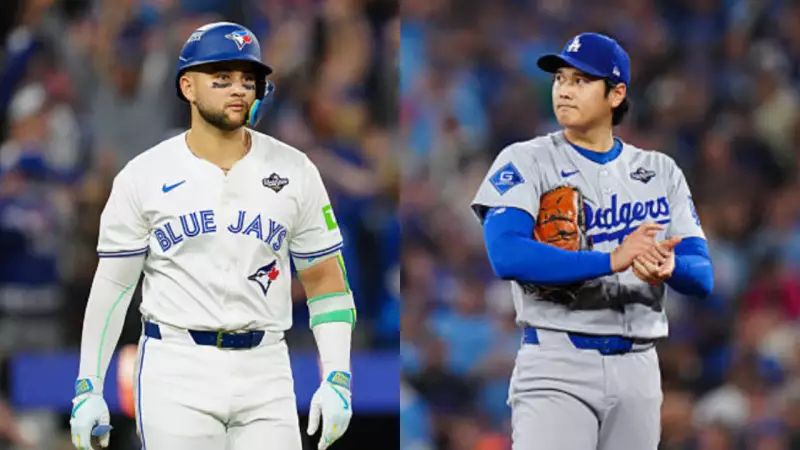
Two MLB Superstars, Two Very Different Contract Stories
In Major League Baseball, player contracts often make headlines. Few recent deals have captured attention like those of Bo Bichette and Shohei Ohtani. Both players stand as superstars in the game. Yet their contract narratives unfold in completely different directions.
Bo Bichette's Journey: Patience and Development Pay Off
The Toronto Blue Jays have taken a measured approach with Bo Bichette. For most of his career, Bichette played under team-controlled contracts. This strategy allowed the Blue Jays to secure top-tier performance at a cost well below market value.
Now entering arbitration-eligible years, Bichette's salary rises alongside his on-field improvements. The arrangement offers clear benefits for both sides. Toronto gains cost flexibility and certainty. Bichette builds leverage through consistent performance.

This contract represents a partnership built over time. Both player and team understand a long-term deal will materialize later. For the Blue Jays, it means paying the right price for premium production. It's a classic story of organic growth within one organization.
Shohei Ohtani's Deal: A Historic Global Phenomenon
Shohei Ohtani's contract with the Los Angeles Dodgers tells a vastly different tale. This agreement involves hundreds of millions of dollars. It reflects not just Ohtani's extraordinary talent, but his unprecedented worldwide appeal.
The contract structure includes innovative deferred payments. This gives the Dodgers valuable financial flexibility. Ohtani's value extends far beyond baseball statistics alone.
He drives ticket sales, attracts sponsorships, and elevates the team's international profile. While the financial commitment is enormous, the potential return matches that scale. Where Bichette's deal focuses on reliable value, Ohtani's contract chases limitless possibility.
Contrasting Philosophies in MLB Team Building
These two contracts highlight divergent approaches across Major League Baseball. Bichette's path demonstrates patient investment in homegrown talent. The Blue Jays nurture a star from within their system.
Ohtani's situation represents a bold statement signing. The Dodgers acquire a once-in-a-generation player who transforms franchise economics. One approach emphasizes calculated risk management. The other embraces high-stakes opportunity.
Both strategies have merit in today's MLB landscape. Teams must balance immediate impact against sustainable roster construction. These contracts show how organizations weigh risk versus reward differently.
Ultimately, Bichette and Ohtani exemplify the spectrum of modern baseball contracts. From steady development to global superstardom, MLB teams employ varied methods to build winning rosters. Their stories remind us that behind every big contract lies a unique strategic vision.