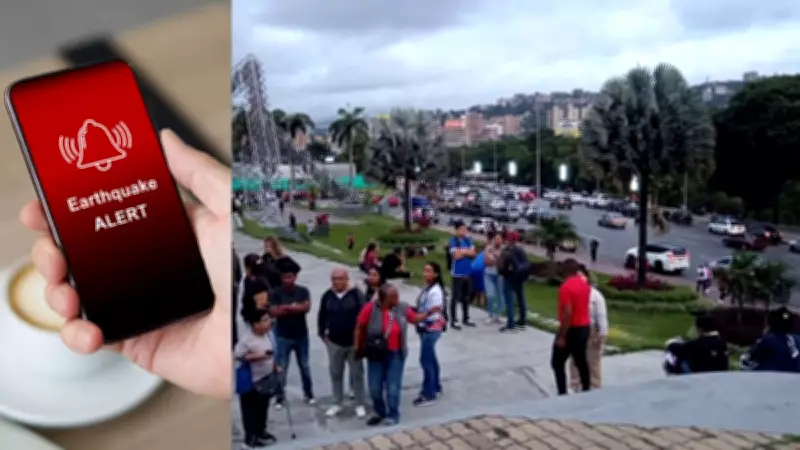
Google's Android Earthquake Alerts System successfully provided Venezuela residents with seconds of advance warning before a powerful 7.3 magnitude earthquake struck on June 22, 2026. The alert, which reached millions of Android users in affected areas, demonstrated the effectiveness of the tech giant's crowdsourced seismic detection network.
How the System Works
The Android Earthquake Alerts System uses the built-in accelerometers in smartphones to detect the initial, less destructive P-waves of an earthquake. When multiple phones in a region detect shaking, Google's servers analyze the data to estimate the earthquake's epicenter and magnitude. If the quake is significant, alerts are sent to Android devices in the affected area, often arriving seconds before the more destructive S-waves.
According to Google, the system detected the Venezuela earthquake within seconds of its onset. The quake, which had a magnitude of 7.3, struck near the coast of Caracas at 11:45 AM local time. The alert gave residents in Caracas and surrounding areas between 5 and 20 seconds of warning, depending on their distance from the epicenter.

Impact and User Response
Many users reported receiving the alert just before the ground began shaking violently. One user tweeted, “My phone started vibrating and a message popped up saying ‘Earthquake detected! Drop, cover, hold on.’ Seconds later, the building started swaying. It was terrifying but the warning helped me get under a table.”
Google confirmed that the system activated for this event because the estimated magnitude exceeded the threshold of 4.5. The company stated, “We are pleased that our system could provide valuable seconds of warning to people in Venezuela. Every second counts in an earthquake.”
Technical Details and Accuracy
The system relies on a network of millions of Android phones acting as mini seismometers. In the Venezuela quake, data from over 100,000 phones were used to pinpoint the location and magnitude. Google’s algorithm processed this data in real-time, issuing the alert within 30 seconds of the earthquake’s start.
This is not the first time the system has been tested. It previously provided alerts for earthquakes in California, Japan, and New Zealand. However, the Venezuela event marks one of the largest magnitudes the system has successfully warned about.
Limitations and Future Improvements
While the system is effective, it has limitations. It cannot predict earthquakes; it only detects them as they happen. The warning time depends on the user’s distance from the epicenter—those closer may receive little to no warning. Additionally, the system requires an active internet connection to receive alerts.
Google continues to improve the system by expanding coverage and refining detection algorithms. The company is also exploring integration with other early warning systems, such as those using seismic sensors, to enhance reliability.
The Venezuela earthquake caused significant damage, with reports of collapsed buildings and casualties. Rescue efforts are ongoing. The early warning system, while not a cure-all, proved its value in potentially saving lives by giving people precious moments to take cover.