Artificial Intelligence Set to Revolutionize Organ Transplantation Landscape
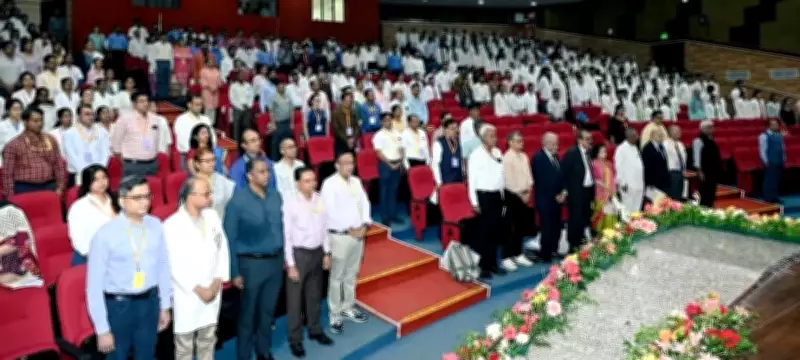
Artificial intelligence (AI) is rapidly emerging as a transformative force in the field of organ transplantation, with medical experts predicting it will fundamentally reshape diagnosis, organ-matching, and compatibility assessments long before it becomes integrated into surgical procedures within operation theatres. This groundbreaking perspective was highlighted during a significant workshop and regional continuing medical education program focused specifically on 'Organ Transplantation and AI in Healthcare.' The event was jointly organized in Bhubaneswar by the prestigious All India Institute of Medical Sciences (AIIMS) Bhubaneswar and the National Academy of Medical Sciences (NAMS) earlier this week.
Government Official Outlines AI's Transformative Potential
Subhasish Panda, the Additional Secretary at the Prime Minister's Office (PMO), delivered a compelling address detailing the immense potential of artificial intelligence to revolutionize organ transplant systems. "AI represents a definitive way forward for organ transplantation by seamlessly integrating vast and complex datasets, thereby empowering medical specialists to make more informed and accurate clinical decisions," Panda stated emphatically.
He elaborated on several critical applications, explaining that AI algorithms can facilitate highly efficient donor-recipient matching by analyzing comprehensive genetic, clinical, and laboratory data. Furthermore, AI systems can enable real-time tracking of organ availability across regions, optimize transportation logistics to ensure faster and more reliable delivery, and significantly enhance overall decision-making processes through advanced predictive analytics and interactive dashboards.

"Artificial intelligence has the capability to interconnect our entire healthcare infrastructure, providing instant information on organ availability locations. It can also dynamically chart the most efficient transportation routes, calculating the minimum possible time required for an organ to reach its intended transplant destination," Panda added, underscoring the logistical advantages.
Medical Experts Detail Specific AI Applications
Dr. Digambar Behera, President of the National Academy of Medical Sciences, provided deeper medical insights, suggesting that specialized AI modules could be developed to predict the likelihood of organ rejection by a recipient's immune system. "AI can consistently assist transplant teams by analyzing and evaluating diverse diagnostic reports and performing sophisticated organ-matching analyses. The medical team can subsequently review the AI-generated results before proceeding with the transplant surgery," Dr. Behera explained.
Dr. Ashutosh Biswas, Executive Director of AIIMS Bhubaneswar, expressed considerable optimism regarding the future integration of AI in transplantation. "Artificial intelligence will assist us in managing the initial, complex processes of organ retrieval and transplantation, including the analysis of blood genomics, proteomics, comprehensive blood testing, and precise organ matching. This integrated process will be substantially faster than current methods," he noted.
Dr. Biswas also revealed that ongoing research is actively exploring whether AI-powered robotic systems could eventually be utilized for the delicate procedures of organ harvesting and surgical transplantation, pointing to a future where technology and surgery merge.
Focus on Preventing Organ Rejection
Dr. Yogesh Kumar Chawla, former Director of PGIMER Chandigarh and Chairman of the NAMS task force on organ donation and transplant, emphasized the paramount importance of accurate donor-recipient matching. "A multitude of intricate investigations are necessary to prevent organ rejection following transplantation. In this critical area, AI provides exceptionally valuable predictive information regarding rejection risks. Our understanding and utilization of AI in this vital sector will continue to expand gradually," Dr. Chawla concluded, highlighting the technology's role in improving transplant outcomes and patient survival rates.

The consensus among leading medical professionals and government officials is clear: artificial intelligence is no longer a futuristic concept but an imminent reality set to enhance the efficiency, accuracy, and success rates of life-saving organ transplantation procedures across India and potentially the global healthcare landscape.