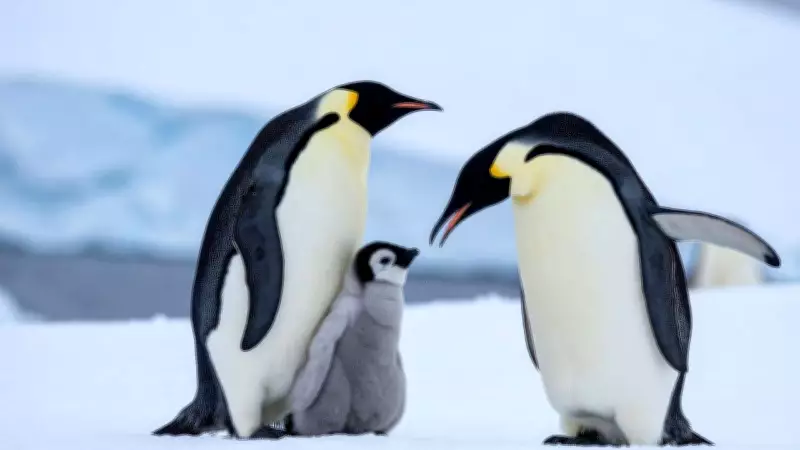
Emperor penguins exhibit a remarkable behavior when winter descends upon Antarctica. While most animals seek warmth or hibernate, these penguins march miles into the freezing cold, where temperatures often plummet below -40 degrees with fierce winds. It seems counterintuitive to raise chicks in such a harsh environment, but there is a strategic reason. By the time the chicks mature, the ice will have broken up, providing abundant food in the sea.
A Split Second Between Life and Death
The struggle for survival begins with a delicate balance. After laying her egg, the female Emperor penguin is exhausted. She must transfer the egg to the male immediately and then trek miles back to the sea to feed. This moment is critical. If the egg touches the ice for even a few seconds, the embryo inside will perish. The male must deftly scoop the egg onto his feet and tuck it into a warm brood pouch on his belly.
The Ultimate Four-Month Fast
Once the females depart, the males are left alone. For two months in the dead of winter, they stand on the ice incubating the eggs, unable to leave for food. By the time the eggs hatch, the males have fasted for four months, losing significant body weight. They survive thanks to their fat reserves, which also help keep themselves and the eggs warm.

The Shared Furnace
No single Emperor penguin can withstand the wind alone. To survive, the males huddle together in groups of thousands. Those on the periphery endure the coldest temperatures and gradually rotate inward, while warmer penguins move outward. In the center of the huddle, temperatures can reach as high as 95 degrees Fahrenheit, created by the collective body heat of the birds.
Keeping a Newborn off the Ice
When the chicks finally hatch, they are vulnerable. Born without feathers, they cannot tolerate the cold. The parents keep them warm by holding them on their feet, under their belly fat. The chicks remain there for weeks, observing the world without touching the ice until they are large enough. When the males become exhausted, the females return from the sea, well-fed and ready to nourish their young. They locate their mates through vocal calls. Upon reunion, the female takes over chick care, allowing the male to finally head to the sea to eat. The parents then alternate feeding duties, ensuring their chick survives in the coldest place on Earth: Antarctica.