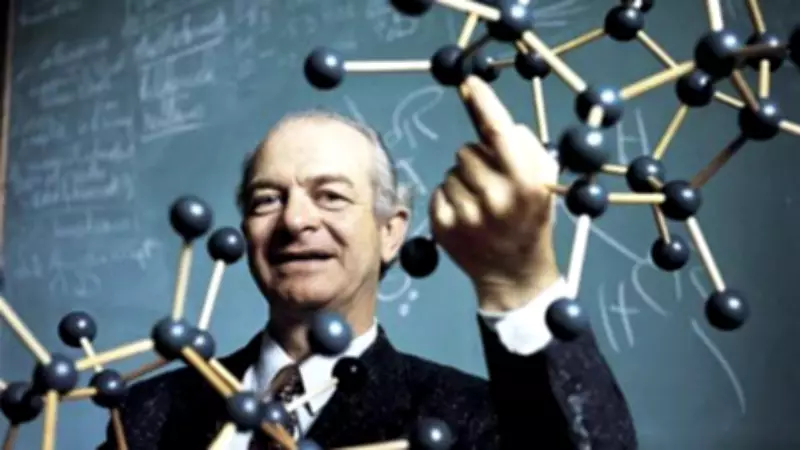
Linus Pauling won the Nobel Prize in Chemistry and later another for peace activism. He was not someone who had a single brilliant idea and relied on it for life. Instead, he practiced what he preached in this quote: he continuously generated ideas, threw many against the wall, and let a few stick. The rest? He moved on. That is how genuine innovation works, and it is almost nothing like how most people approach problem-solving.
The Myth of Rare Ideas
We are taught that good ideas are rare and precious. You are supposed to sit quietly, think deeply, and eventually a fully formed brilliant idea descends upon you like divine inspiration. But that is not reality. That is a fairy tale we tell about genius. Real genius is mostly about showing up with a notebook and being willing to generate fifty mediocre ideas so you can find one worth pursuing.
The Best Way to Have a Good Idea
Pauling's advice works for a reason, and it is not mystical. When you commit to generating many ideas, you mathematically increase your odds of hitting something good. It is simple math. If you generate ten ideas, maybe one is worth developing. If you generate a hundred ideas, you likely get five with real potential. More attempts mean more chances for something useful to emerge.

Beyond Obvious Solutions
But there is something else happening too. The first ideas you have are usually the ones you have already thought of. They are the obvious paths, the well-worn solutions that everyone else considers. When you keep generating ideas—pushing past easy answers and forcing yourself to keep thinking—that is when you start getting somewhere interesting. The 40th idea does not come from mainstream thinking. It comes from unusual angles, making weird connections, and combining things that are not normally combined.
How Scientific Breakthroughs Happen
This is actually how scientific breakthroughs happen. You do not get there by being careful and thoughtful. You get there by being prolific. You try things. Some fail spectacularly. Some fail quietly. And occasionally, something works in an unexpected way that opens up an entirely new direction.