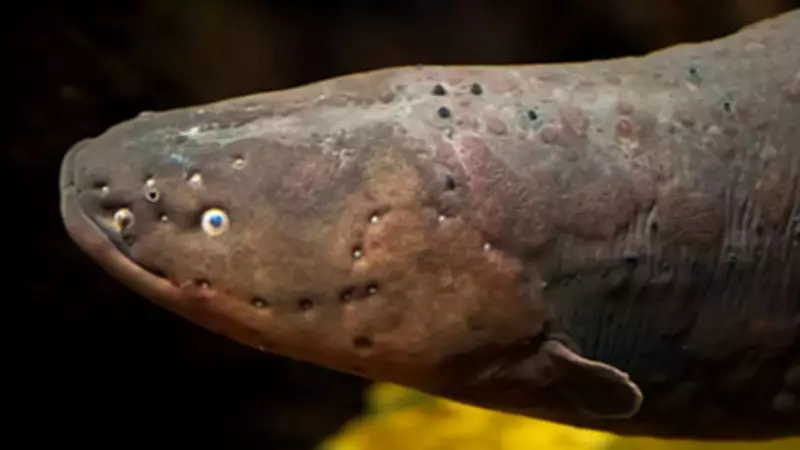
Electric Eels: More Than Just a Shocking Discovery
For centuries, electric eels have captivated human imagination with their snake-like appearance and ability to deliver powerful electrical shocks. Long perceived as a single species, recent scientific breakthroughs have unveiled a more complex reality. Researchers now confirm the existence of three distinct species: Electrophorus electricus, E. varii, and E. voltai. These remarkable creatures, which can grow over 2.5 meters in length and weigh more than 20 kilograms, are not true eels but belong to the knifefish family, closely related to catfish and carp.
The Anatomy of a Living Battery
Electric eels function akin to biological batteries, thanks to specialized muscle cells called electrocytes stacked within their bodies. Each cell features positive and negative sides, generating electric pulses when triggered. They possess three primary organs that produce electricity at varying strengths:
- Strong Shocks: Used for defense or stunning prey, produced by the main organ and part of the Hunter's organ.
- Weak Pulses: Emitted by the Sach's organ and the other half of the Hunter's organ, aiding in navigation and communication with other eels.
Notably, E. varii can generate up to 860 volts, nearly four times the voltage of a standard UK electrical plug. This capability allows them to create a full circuit by keeping their negative end in water, maximizing their shocking power.

Life in Murky Waters: Survival Strategies
Electric eels thrive in the murky, slow-moving waters of the Amazon and Orinoco rivers in northern South America, including pools, swamps, and oxbow lakes. With poor eyesight, they rely on electrolocation to sense their environment. They also breathe air, surfacing approximately every ten minutes to cope with low oxygen levels in their habitats.
During dry seasons, as pools shrink and predators like caimans and jaguars become more prevalent, their electrical shocks serve as a crucial deterrent. Intriguingly, these eels sometimes hunt in coordinated groups, corralling prey and delivering synchronized shocks—a sophisticated strategy for such seemingly primitive creatures.
Potential Dangers and Ecological Role
Could an electric eel kill a human? Experts suggest it is theoretically possible, as multiple shocks could induce cardiac arrest or cause drowning. However, these fish are generally not aggressive and use their electricity primarily for defense. While the idea of a heart-stopping shock is unnerving, fatalities are rare.
Other fish, such as stargazers, certain catfish, and rays, also produce electricity, though mostly in weak pulses for environmental sensing. Some species, like the bluntnose knifefish, even mimic electric eels to deter predators, showcasing clever survival adaptations.
Breeding, Diet, and Scientific Inspiration
Electric eels breed during dry or early wet seasons, with males constructing bubble nests and females laying up to 1,200 eggs per season. Their diet consists mainly of fish but also includes crabs, insects, and small mammals, highlighting their role as versatile predators rather than monsters.
While electric eels cannot power batteries due to slow recharge rates and inability to produce continuous high-power electricity, they inspire scientific innovation. Lab-grown eel tissue holds promise for developing flexible, tiny bio-batteries, potentially revolutionizing medical devices like pacemakers.
This discovery not only deepens our understanding of biodiversity but also opens new avenues for bio-inspired technology, blending nature's wonders with human ingenuity.