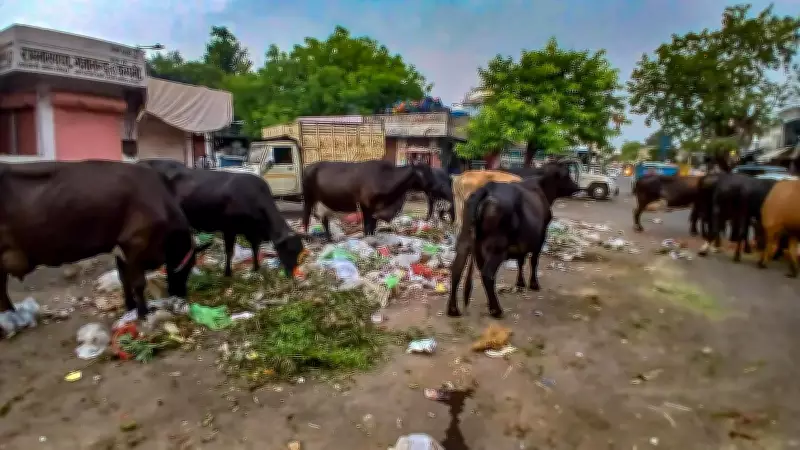
Jaipur: As the Supreme Court pushes states to implement stricter solid waste management norms, Jaipur continues to struggle with the basics of garbage collection and segregation. The court has directed that waste be segregated into four categories: wet, dry, sanitary and e-waste, while stressing that citizens and municipal bodies share equal responsibility in making the system work. However, on the ground, the city is still grappling with irregular garbage collection, overflowing hoppers and poor segregation practices.
Residents Voice Concerns
Residents in several localities complain that garbage hoppers often fail to arrive on time and, in some cases, remain uncleared for days, leading to the growth of open dumping spots. Even where households separate wet and dry waste, the effort is frequently undone during collection.
“The problem is that waste collected separately often ends up being dumped into the same compartment by sanitation workers. If wet and dry waste are getting mixed, how will sanitary waste and e-waste be handled separately?” said a resident.

Municipal Corporation's Response
The situation also raises questions over Jaipur Municipal Corporation’s claim that the city is set to secure a better ranking in Swachh Survekshan 2025. With garbage visible across several parts of the city, residents say the reality on the ground does not match the optimism. JMC commissioner Om Kasera acknowledged the shortage of manpower but said citizens must also play their part.
“We admit there is a shortage of manpower. But the problem is that many citizens do not take responsibility. Even in areas where garbage vehicles arrive daily, people often fail to hand over waste on time and later dump it in the open. How can that become solely our responsibility?” Kasera said.
Infrastructure Improvements
On implementing the Supreme Court’s directions, Kasera said the civic body is strengthening infrastructure. “We already have a mechanised transfer station at Jhalana, and another one on Delhi Road is being mechanised. We are improving our systems first so that we can effectively engage and educate residents,” he added.
Despite these efforts, the gap between policy and practice remains wide. The city's struggle highlights the challenges of enforcing waste segregation norms in urban areas, where both administrative capacity and public cooperation are critical. With the next Swachh Survekshan approaching, Jaipur's performance will depend on closing this gap through better enforcement, community engagement, and infrastructure upgrades.