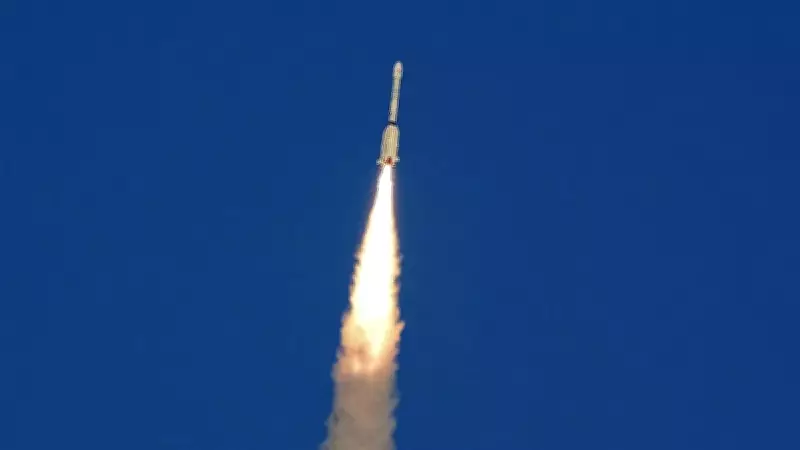
The Indian Space Research Organisation (ISRO) has not conducted a single rocket launch since the back-to-back failures of its Polar Satellite Launch Vehicle (PSLV) in January 2026. This prolonged hiatus, now spanning over six months, has left scientists at the Vikram Sarabhai Space Centre (VSSC) and other critical ISRO facilities in Thiruvananthapuram deeply frustrated.
Consecutive PSLV Failures Trigger Launch Freeze
The two PSLV failures in January marked an unprecedented low for ISRO's workhorse launch vehicle. The first failure occurred on January 12, when a PSLV-C63 mission carrying an Earth observation satellite veered off course and disintegrated. Just two weeks later, on January 26, another PSLV (C64) carrying a communication satellite failed due to a third-stage anomaly. These consecutive losses prompted an immediate suspension of all launch activities pending a thorough investigation.
According to sources within ISRO, the launch moratorium was initially expected to last two to three months. However, the investigation and subsequent corrective measures have taken longer than anticipated, leading to the current seven-month gap.

Impact on Scientists and Morale
The delay has particularly affected researchers and engineers at VSSC, which designs and integrates launch vehicles. Many scientists, speaking on condition of anonymity, expressed dismay over the lack of progress. “We are used to tight schedules and frequent launches. This silence is deafening and demoralizing,” one senior scientist told reporters. The uncertainty has also raised concerns about missed opportunities for scientific payloads and commercial contracts.
ISRO typically launches 8-10 missions per year. With no launches in the first half of 2026, the agency faces a significant backlog. The hiatus also affects India's space ambitions, including planned missions for lunar exploration and the Gaganyaan human spaceflight program.
Proposed Solutions and Next Steps
To address the issue, ISRO has formed a high-level committee to review the PSLV design and quality control processes. The committee is expected to submit its final report by August 2026. Meanwhile, engineers are working on modifications to prevent a recurrence of the third-stage failure. A test launch of the upgraded PSLV is tentatively scheduled for September 2026, though scientists caution that further delays are possible.
The gap has also prompted ISRO to accelerate the development of its Next Generation Launch Vehicle (NGLV), which is designed to be more reliable and cost-effective. However, the NGLV is not expected to be ready until 2028 at the earliest.
Broader Implications for Indian Space Program
The launch hiatus has implications beyond immediate missions. India's commercial launch services, which have been a growing revenue source, are now at risk as customers seek alternative providers. Foreign satellite operators may reconsider contracts, potentially impacting ISRO's market share. Domestically, the delay hampers the deployment of satellites for communication, Earth observation, and navigation, affecting services ranging from weather forecasting to disaster management.
Despite the setbacks, ISRO remains committed to its long-term goals. The agency recently completed successful tests of its cryogenic engine, a key component for future heavy-lift missions. However, until a rocket launches again, the frustration among scientists and stakeholders is likely to persist.