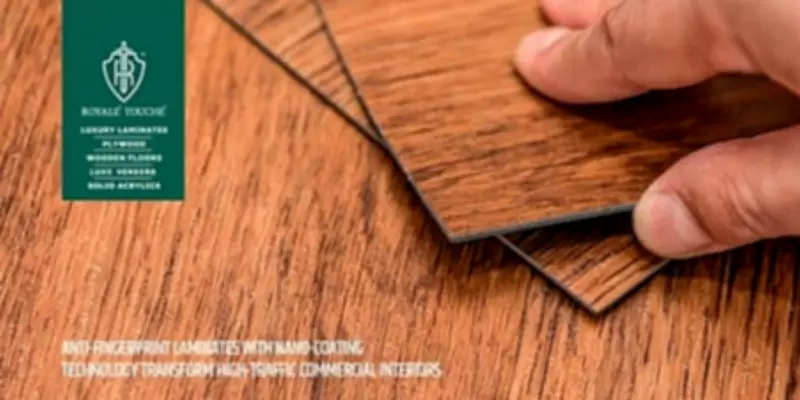
Anti-fingerprint laminates embedded with nano-coating technology are rapidly transforming high-traffic commercial interiors by offering unprecedented durability and ease of maintenance. These advanced surfaces, which resist smudges, stains, and scratches, are becoming a preferred choice for offices, retail stores, hospitals, and airports.
How Nano Coating Works
Nano-coating technology applies an ultra-thin layer of silicon dioxide particles to the laminate surface. This layer fills microscopic pores, creating a smooth, hydrophobic barrier that repels oils and water. According to industry reports, the coating reduces fingerprint visibility by up to 95% and cuts cleaning frequency by 70% compared to standard laminates.
The technology also enhances scratch resistance and UV stability, ensuring the laminates maintain their appearance for years. 'These laminates are a game-changer for spaces where cleanliness and aesthetics are non-negotiable,' said Rajesh Mehta, product manager at a leading laminate manufacturer.

Benefits for High-Traffic Areas
In commercial settings, high-touch surfaces like elevator panels, countertops, and door handles often accumulate unsightly marks. Traditional laminates require frequent polishing, increasing maintenance costs. With nano coatings, facility managers report a 50% reduction in cleaning chemical usage and labor hours.
Statistic from a field study indicates that after installing anti-fingerprint laminates in a busy shopping mall, the need for daily wipe-downs decreased by 60%. Retailers noted improved customer satisfaction due to consistently clean displays.
Application and Durability
These laminates are available in a variety of textures and finishes, from matte to gloss, and can be applied over existing surfaces. The nano coating bonds at the molecular level, making it highly resistant to abrasion. Tests show the coating lasts up to 10 years under normal wear, according to the company's technical datasheet.
In healthcare environments, the non-porous surface also inhibits bacterial growth, aligning with infection control protocols. The laminates are easy to clean with standard disinfectants without damaging the coating.
Industry Adoption and Future Trends
Major architects and interior designers are increasingly specifying these products for new projects. 'The demand for low-maintenance, high-performance surfaces is driving innovation,' noted interior designer Priya Sharma. As sustainability becomes a focus, manufacturers are developing eco-friendly nano coatings with lower volatile organic compounds.
Market analysts predict that the anti-fingerprint laminate sector will grow at a compound annual rate of 12% over the next five years, driven by commercial real estate expansion. This technology is set to become a standard feature in modern commercial interiors.