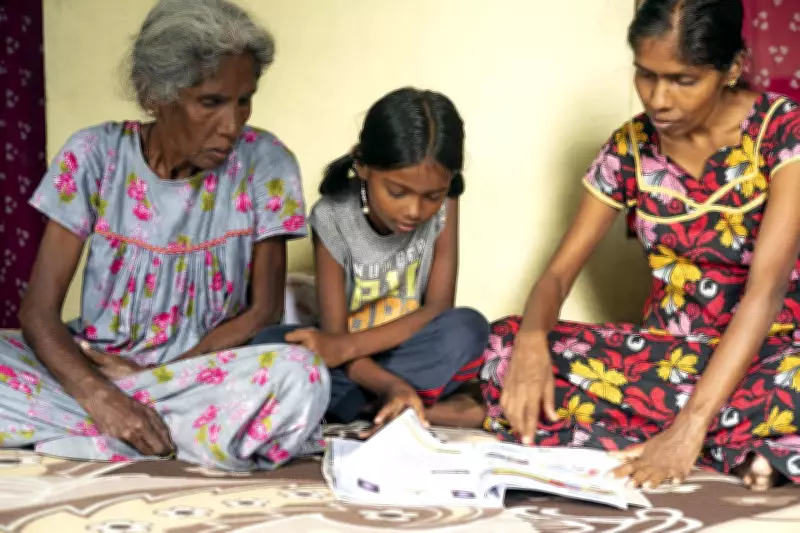
Chennai: It has been 36 years since she arrived by boat to Rameswaram as an eight-year-old, but Ansubo Selvendran still remembers every detail of that journey after fleeing the Eelam War in Sri Lanka — arriving at the refugee camp at Virudhachalam in Cuddalore. Over the decades, she has watched the camps evolve from makeshift settlements covered with plastic sheeting to rows of concrete houses. Yet despite the moves between shelters, one thing has remained constant: the feeling of being displaced.
Ansubo’s experience reflects a reality shared by thousands of Sri Lankan Tamil refugees who live in Tamil Nadu decades after the war that uprooted them. While their living conditions have improved over the years, refugees say many of the challenges associated with camp life persist.
Overcrowding and Safety Concerns
“In Sri Lanka, we all had our own house, electricity and water. Now, one house is shared by several families. Instead of common housing, we would prefer separate houses,” says Ansubo. “Various governments have provided assistance and upgraded housing, but there is still overcrowding. Construction quality too needs to improve. Drug abuse is rampant and it’s not very safe for women.”

Vijayakumar’s experience offers another glimpse into the conditions that greeted thousands of Sri Lankan Tamils who arrived in Tamil Nadu. Like many refugees who landed on the state’s shores in the early 1990s, his family found themselves housed in a granary with 1,000 others as there was no space at the camps.
“We stayed there for six months in the heat and made do with whatever bedding was available. Food was limited and there was no privacy. My mother and other women had to change their clothes in the open because there were no proper facilities. We were just trying to survive,” he says.
Statelessness and Uncertainty
While the immediate hardships of arrival have faded, refugees say a different struggle has emerged over the years: the uncertainty of living for decades without citizenship or permanent rights. Ansubo says the absence of legal identity continues to shape everything from education to employment opportunities.
“We’ve been getting support, but we can’t travel abroad easily. We feel stateless,” she says. For Ansubo, having studied in Tamil Nadu and raised two daughters here, she says India is the only home her family truly knows. “But I still feel like an outsider.”
You Can Also Check: Gold Rate in Chennai | Silver Rate in Chennai | Bank Holidays in Chennai | Public Holidays in Chennai | Chennai AQI | Weather in Chennai | Petrol Price in Chennai | Diesel Price in Chennai | CNG Price in Chennai | LPG Price in Chennai
Stay updated with the latest Chennai news. Download the TOI App.
About the Author
Muskaan Ahmed covers social issues, human rights, and culture. Her work highlights underrepresented communities, with a focus on caste, dignity, and the lives of people from tribal communities. She also writes about gender, health, and urban life. She is committed to journalism that amplifies voices and initiates dialogue on issues faced by people from all walks of life.