There is a phrase that circulates in the villages of Garhwal whenever the conversation turns to rail connectivity. It is spoken with the gravity of a prophecy, because it essentially is one: 'Jis din rail chal gayi, poora Garhwal ki zindagi badal jayegi.' The day the train comes, all of Garhwal's life will change. For parts of Garhwal, that day has arrived. For others, it is closer than it has ever been.
The Four Pillars of Infrastructure
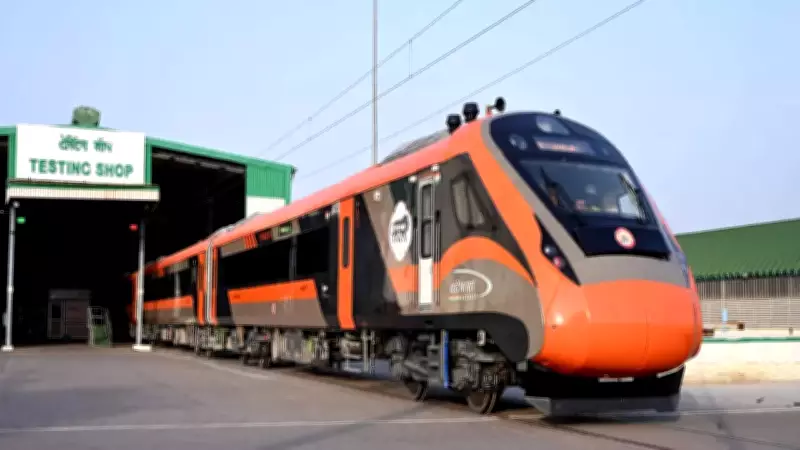
The Uttarakhand government has made Rail, Road, Ropeway, and Regional Connectivity the four pillars of its infrastructure story. Among these, rail is not just the most transformative but also the most emotionally resonant. The Vande Bharat service connecting Dehradun to Lucknow is the most visible expression of this transformation. It cuts journey time significantly, runs with a reliability that older services could not match, and signals to investors, tourists, and young Uttarakhandis weighing whether to look for work in the plains that the state is connected to the national mainstream in a way it has not been before.
The Army Family
Uttarakhand has one of the highest concentrations of defence personnel of any Indian state. The hills have given the Indian Army some of its most decorated soldiers, and the tradition continues across generations. For many of these men, the journey home used to take two days — a train to Haridwar, then a connecting service or a bus winding up into the mountains. A weekend leave was barely worth the travel. A soldier posted far from home might see his family twice a year if logistics aligned. The Vande Bharat has not solved all of this, but it has changed the arithmetic. A faster, more reliable connection between Dehradun and the plains means the weekend home — previously a theoretical option — becomes a practical one. That is not a connectivity story; it is a family story. As those who have heard it described put it: 'Dilon ki dooriyaan bhi kam karti hai.' Roads and rail don't just reduce physical distance; they reduce the distance between hearts.

The Kankhapur-Bageshwar Line
If the Vande Bharat represents what has already changed, the sanctioned Kankhapur-Bageshwar rail line represents what is coming. Connecting the Kumaon hills to the plains, this project — sanctioned by the central government — will, when complete, do for Kumaon what the Dehradun connections have been doing for Garhwal: open up destinations that until now have been defined by their distance. The Uttarakhand government has been a consistent advocate for this project, understanding that rail connectivity to the interior is not just a development goal — it is a statement about which parts of the state matter.
The Government's Rail Vision
The Uttarakhand government's framing of rail as an emotional story — not just an infrastructure one — reflects a sophisticated understanding of its audience. The villages of Garhwal and Kumaon do not need to be told that a train would be transformative; they have been waiting for it for decades. What the government's communication strategy does is give that waiting a name, a face, and a story that travels beyond the hills where it is felt. The train is coming, and with it, as the old phrase promises, everything changes.
Stay updated with the latest Dehradun news. Download the TOI App.