Glacier Retreat Uncovers Remains of 1959 Antarctic Meteorologist, DNA Confirms Identity
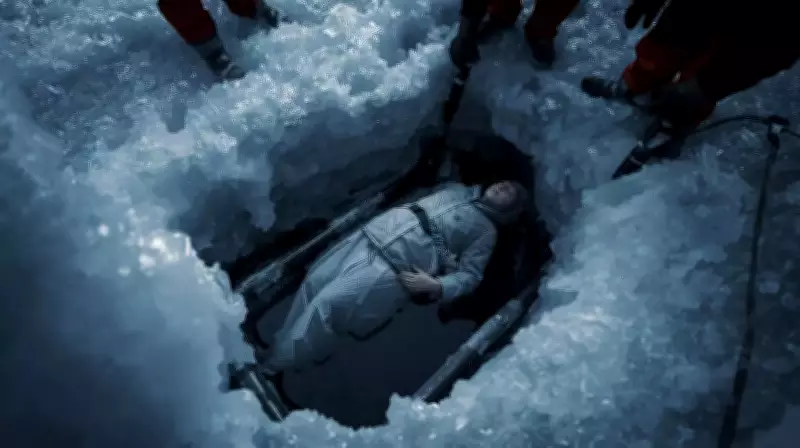
In a remarkable turn of events, the relentless retreat of ice in Antarctica has yielded a poignant discovery. Among rocks newly exposed by the shrinking Ecology Glacier on King George Island, a set of human remains was found and meticulously documented. It was a discovery that defied expectations, as the frozen landscape is not known for giving back what it takes.
A Polish research team operating near Admiralty Bay initially recorded the site and initiated recovery efforts. Advanced forensic DNA testing has now conclusively confirmed that the remains belong to Dennis Bell, a British meteorologist who tragically died in the region in 1959. Bell was a member of the Falkland Islands Dependencies Survey, the precursor organization to the modern British Antarctic Survey. His body had never been recovered at the time of the accident, leaving a decades-long mystery. Now, 66 years later, shifting ice patterns and dedicated scientific fieldwork have rewritten history, transforming a long-unresolved loss into a story of closure.
Journey Home and Forensic Confirmation
The recovered remains were transported with great care aboard the British Antarctic Survey research ship RRS Sir David Attenborough. They were first taken to the Falkland Islands and then onward to the United Kingdom. Malcolm Simmons, the Coroner for the British Antarctic Territory, accompanied the remains from Stanley to London, with logistical support provided by the Royal Air Force to ensure a respectful repatriation process.

Forensic DNA testing was conducted by Professor Denise Syndercombe Court of King’s College London. Samples from the remains were compared with DNA provided by Bell's brother, David, and his sister, Valerie Kelly. The results were overwhelmingly conclusive, described as more than one billion times more likely to indicate a familial relation than not. For Bell's family, this scientific confirmation has finally ended decades of painful uncertainty, offering a definitive answer to a lifelong question.
Personal Artefacts Recovered from the Glacier Site
During the recovery effort near the Ecology Glacier, researchers documented more than 200 personal items alongside the human remains. These artefacts paint a vivid picture of Bell's life and work in the harsh Antarctic environment. Among the items recovered were fragments of radio equipment, a torch, ski poles, an inscribed wristwatch, a Swedish Mora knife, and part of an ebonite pipe stem.
All these objects were found scattered among rocks that had become exposed as the glacier receded over time. In February 2025, a multidisciplinary team from the Henryk Arctowski Polish Antarctic Station returned to the site for a more detailed archaeological survey. This follow-up mission led to the collection of additional bone fragments and artefacts, further enriching the historical record of the event.
The 1959 Crevasse Accident at Admiralty Bay
Dennis Bell was just 25 years old when he met his tragic end on 26 July 1959. He had joined the Falkland Islands Dependencies Survey in 1958 as a meteorologist and was stationed at Admiralty Bay on King George Island, located off the Antarctic Peninsula. On the day of the accident, Bell and his colleague, surveyor Jeff Stokes, were ascending a glacier with dog teams.
Believing they had passed the most dangerous crevassed terrain, Bell moved ahead to encourage the dogs. At that moment, he was not wearing skis. Suddenly, the snow gave way beneath him, and he plunged into a crevasse. Stokes quickly lowered a rope, to which Bell responded by tying it to his belt. However, as the dogs pulled in an attempt to rescue him, Bell's body became jammed against the lip of the crevasse. The belt broke, and he fell back into the depths. A subsequent search in rapidly worsening weather conditions found no sign of survival, leaving his fate unresolved for over six decades.

Life and Legacy of a British Antarctic Survey Predecessor Member
Dennis Bell grew up in Harrow in northwest London and served in the Royal Air Force before embarking on his Antarctic journey. Colleagues fondly remembered his humour and restless energy at the base, traits that made him a beloved member of the expedition team. His legacy is permanently etched into the geography of the region; a headland on King George Island is named Bell Point in his honour.
For Bell's family, the news of his discovery was both shocking and astonishing, bringing a mix of emotions after so many years. How his memory will be formally commemorated now remains a private family decision. The ice has shifted, and with it, the historical record has been irrevocably altered, providing a solemn reminder of the enduring human spirit in the face of nature's extremes.