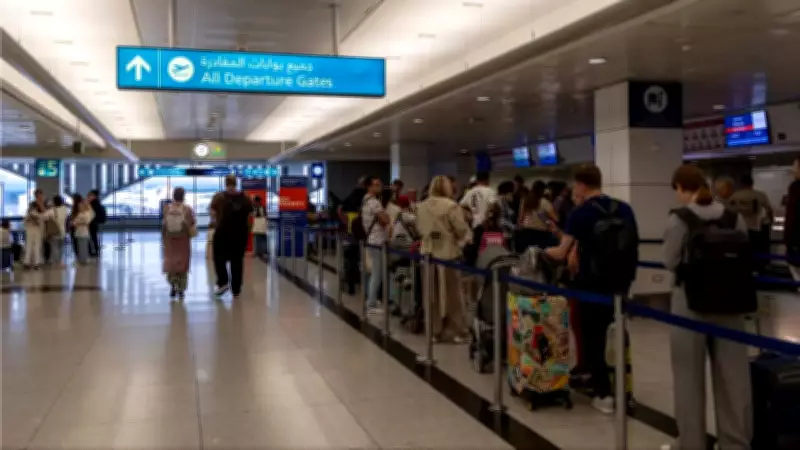
UAE Airspace Disruption Intensifies as Sharjah Airport Issues Urgent Passenger Advisory
As military strikes by the United States and Israel on Iran escalate into a broader regional confrontation, civil aviation in the United Arab Emirates is experiencing unprecedented disruption, with Sharjah International Airport (SHJ) at the forefront of the chaos. Authorities have issued an urgent advisory urging travelers to stay informed and exercise caution following a series of flight cancellations and delays. This situation stems from the temporary closure and partial restriction of UAE airspace, implemented as a safety measure amid heightened security concerns linked to the ongoing conflict.
Passenger Guidance and Operational Challenges at Sharjah Airport
In its advisory, Sharjah Airport strongly encouraged all passengers to contact their airlines directly before heading to the airport to confirm the latest flight information. This recommendation comes as numerous flights have been cancelled, delayed, or rerouted due to precautionary airspace measures. Passengers were also advised to avoid traveling to the airport unless absolutely necessary, since ongoing restrictions could result in further changes at short notice, exacerbating travel inconveniences.
Sharjah Airport officials emphasized, "We strongly encourage passengers to contact their airlines directly to verify the status of their flights before heading to the airport." This directive aims to mitigate confusion and ensure passenger safety amidst rapidly evolving conditions.

Root Causes: Regional Conflict and Aviation Safety Measures
The advisory follows major disruptions across UAE airspace triggered by coordinated military actions by the US and Israel against Iran, along with subsequent responses from Tehran. The General Civil Aviation Authority (GCAA) announced a temporary partial closure of UAE airspace as a safety measure designed to protect civilian flights and aircraft crews. This decision has forced airlines and airports to adjust operations accordingly, leading to significant operational hurdles.
As a result of these measures:
- Flights scheduled at Sharjah International Airport have been cancelled or delayed, often with minimal advance warning, leaving travelers stranded or scrambling for alternatives.
- Passengers are strongly urged to verify flight statuses with airlines instead of relying on social media updates or unofficial posts, which may spread misinformation.
- Travellers are being advised to prepare for the possibility of rescheduling or alternate routing due to shifting operational conditions, as airlines navigate restricted air corridors.
Sharjah Airport's messaging aligns with similar advisories issued by major UAE hubs, including Zayed International Airport and Dubai International Airport. At these locations, passengers have been instructed to check with airlines before arriving and to defer travel until the situation stabilizes, highlighting a unified response to the crisis.
Broader Regional Impact and Global Aviation Ripple Effects
The aviation chaos is part of a wider regional response to the ongoing conflict between the US, Israel, and Iran. Following coordinated strikes on Iranian targets, several countries in the region, including the UAE, took the unusual step of limiting or closing airspace for civilian traffic as a precaution against potential missile or drone threats. This has compelled airlines to suspend services or reroute flights away from standard corridors that typically traverse the Gulf region.
These developments have triggered a ripple effect across global aviation networks. Major hubs such as Dubai and Abu Dhabi have also suspended or significantly restricted operations, causing widespread travel disruptions. As the conflict deepens, carriers from Europe and Asia are reconsidering their flight schedules through the Middle East, leading to extensive cancellations and travel chaos that extends beyond regional borders.
Essential Traveler Tips Amidst the Sharjah Airport Advisory
For individuals planning travel through Sharjah Airport or neighboring UAE hubs in the coming days, the following recommendations are crucial:

- Check flight status directly with your airline before leaving home, as schedules may change rapidly due to evolving airspace conditions.
- Avoid traveling to the airport unless you have confirmed flight details, to minimize unnecessary disruptions and potential safety risks.
- Follow official airport and airline communication channels rather than unofficial social media posts or rumors, which can lead to misinformation.
- Prepare for possible rebooking or refunds if flights are cancelled due to airspace restrictions, ensuring financial and logistical readiness.
Authorities have emphasized that passenger and flight safety remain the top priority, and that these precautionary measures are in place to ensure operations can resume normally once conditions are deemed safe. The passenger advisory at Sharjah Airport reflects a broader aviation crisis unfolding across the Middle East in response to escalating geopolitical tensions.
Conclusion: Navigating Unprecedented Disruption in Global Transportation
With airspace closures designed to protect civilian flights, airlines and airports are being forced to rethink routing, cancellations, and traveler communication strategies. This unprecedented disruption, affecting UAE airports and airline operations worldwide, underscores how swiftly regional security developments can impact global transportation networks. As the situation continues to evolve, travelers and industry observers are closely monitoring updates on when normal operations might resume and how the conflict will shape travel patterns across the region in the long term.
In summary, Sharjah International Airport has issued a passenger advisory urging travelers to check flight statuses due to cancellations and delays linked to airspace closures. The disruption is directly tied to the ongoing US-Israel strikes on Iran and subsequent regional security measures that have limited UAE airspace. Passengers are advised to confirm details directly with airlines and avoid heading to the airport without up-to-date information. The aviation impacts extend far beyond Sharjah, affecting travel throughout the UAE and influencing global airline operations, highlighting the interconnected nature of modern air travel in times of crisis.