The car boot check, a ubiquitous security measure at hotels and malls across India, may have outlived its effectiveness. This is the argument put forward by Arun Kampani, a retired Indian Police Service (IPS) officer, in a recent opinion piece. Kampani contends that while the practice was a necessary response to the 2008 Mumbai terror attacks, it has become a predictable ritual that savvy adversaries can easily circumvent.
From Vital Security to Predictable Routine
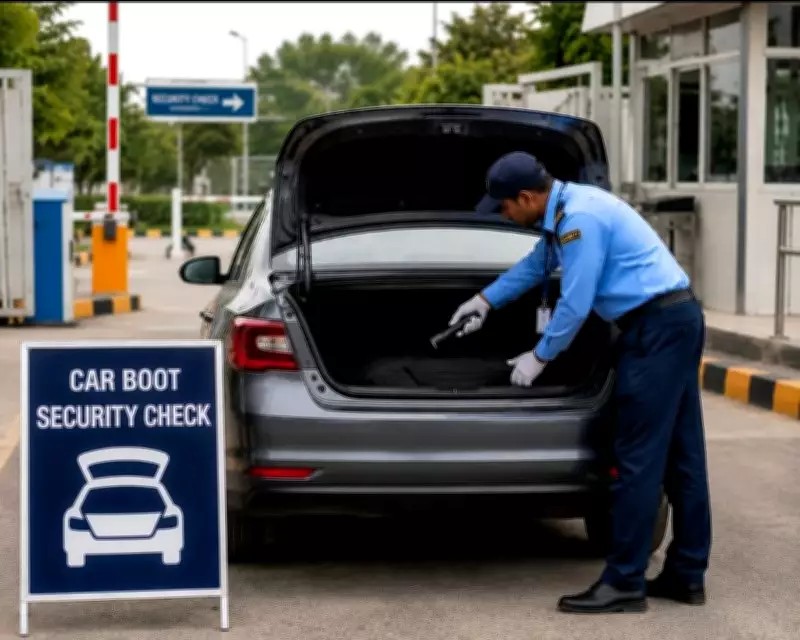
Kampani describes the typical scene: a security guard asks him to open the boot, peers inside with "admirable seriousness," and then waves him through. He complies without protest, noting that the procedure gives him a "comforting feeling that national security is not being taken for granted." However, he argues that this very predictability undermines its purpose. "If I know that my car boot will be checked every time I enter a hotel or a mall, surely a terrorist knows it too," he writes. "In fact, he has probably studied the routine more carefully than I have."
The boot check became standard after the 2008 attacks, when hotels and other vulnerable targets tightened security. The threat was real, and the response was understandable. Over time, the check has become a familiar ritual that visitors accept without a second thought. But Kampani warns that familiarity breeds complacency. "The trouble with habits is that everyone learns them," he says. "Familiarity is useful in many walks of life, but security is not one of them."

Security as a Contest of Adaptation
Kampani, who served as a police officer for decades, argues that security is fundamentally a "contest of adaptation." One side devises safeguards; the other looks for loopholes. The advantage, he says, belongs not to the side with the longest checklist but to the side that remains unpredictable. Random checks, changing patterns, and occasional surprises create uncertainty in the minds of potential attackers. Predictability does the opposite.
"The purpose of a security drill is not merely to reassure the innocent; it is to introduce doubt into the mind of the guilty," Kampani writes. He emphasizes that his critique is not an argument against security itself, but against mechanical, unthinking security. "Security is too important to become mechanical," he insists. The best time to rethink a procedure, he suggests, is before it becomes a ritual.
A Broader Lesson for the Age of Obsolescence
Kampani draws a broader lesson from the boot check's decline. "We live in an age where obsolescence sets in before we realise it," he observes. Technology is updated, professional skills are refreshed, and systems are redesigned. The challenge is not merely to create procedures but to recognize when they need renewal. He likens the boot check to a retired officer: "Retirement is not a punishment; it is recognition of long and honourable service." Security measures, he argues, deserve the same respect. They should be appreciated for what they have achieved and, when the time comes, succeeded by newer ideas.
The boot check, Kampani concludes, "has rendered faithful service for many years. Perhaps it is now ready for a pension." His call is for a shift from rigid, predictable protocols to adaptive, intelligent security that keeps pace with evolving threats.