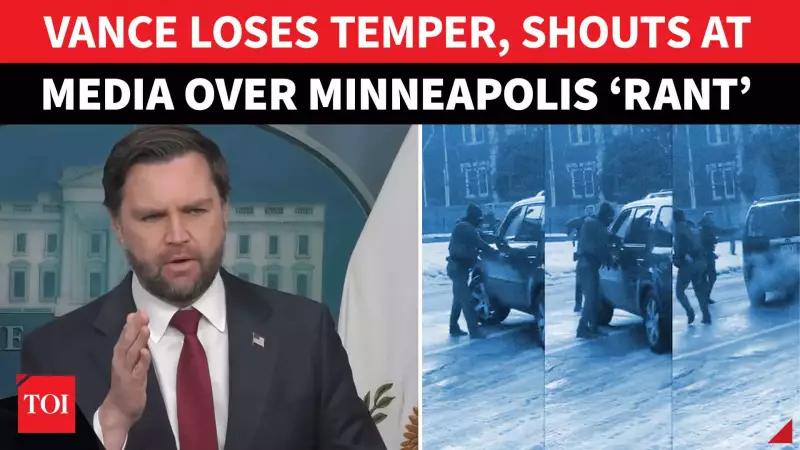
US Vice President JD Vance engaged in a fiery confrontation with reporters at the White House on January 9, 2026, following a fatal shooting incident in Minneapolis involving an Immigration and Customs Enforcement (ICE) agent. The exchange, marked by sharp rhetoric, has significantly escalated the political debate surrounding immigration enforcement and public safety in the United States.
Heated Exchange at the White House
Facing intense questioning, Vance did not hold back in his defence of the federal officer's actions. He argued that the agent was performing his duty and that the use of force was justified under the circumstances. In a moment that captured national attention, Vance turned the tables on the press corps, accusing certain media outlets and Democratic politicians of deliberately inciting public unrest against law enforcement agencies. He urged some journalists to "be ashamed" of their reporting, which he claimed was biased and inflammatory.
New Justice Department Crackdown Announced
Moving beyond the immediate defence, Vance made a significant policy announcement. He revealed that the US Justice Department is launching a new crackdown targeting what the administration describes as extremist networks. According to the Vice President, these groups are actively working to obstruct federal law enforcement operations. This move is seen as a direct response to the growing tensions and is poised to become a central front in the ongoing political battle over how immigration laws are executed and how accountability for federal agents is determined.

Vance issued a stern warning during the press conference, stating that attacks on federal agents would be met with the full force of the law. The administration's stance frames the issue as a matter of national security and the rule of law, positioning any resistance to ICE operations as part of a dangerous, organised effort.
Political Repercussions and Escalating Tensions
The Minneapolis shooting and Vance's vehement response have poured fuel on an already raging fire in American politics. The incident touches on several deeply divisive issues:
- Immigration Enforcement: The role and methods of ICE remain a polarising topic.
- Public Safety: Debates on how to balance enforcement with community safety.
- Accountability: Questions over oversight and consequences for law enforcement actions.
By announcing a Justice Department initiative against so-called obstruction networks, the Vance-led administration is taking a hardline, proactive stance. This action is expected to draw strong criticism from opposition groups and civil liberty organisations, who may view it as an overreach that could threaten legitimate protest and oversight. The event marks a pivotal moment where the political rhetoric around immigration has intensified, setting the stage for further conflict between the executive branch, its opponents, and the media.