
SWAMIH-2 Fund: Rs 15,000 Crore Lifeline for Homebuyers
The Indian government is launching SWAMIH-2, a Rs 15,000 crore fund to complete 100,000 stalled housing projects. Learn how this initiative will benefit middle-class homebuyers.

The Indian government is launching SWAMIH-2, a Rs 15,000 crore fund to complete 100,000 stalled housing projects. Learn how this initiative will benefit middle-class homebuyers.

Students from Berhampur's private schools excel at the National Urja Mela in New Delhi. Chinmayee Pasupalak and Prince Kumar Behera secure first prizes in science exhibition and quiz, highlighting innovative clean energy projects. Read their inspiring sto

Google's parent Alphabet acquires clean energy developer Intersect Power for $4.75 billion to secure electricity for AI growth. CEO Sundar Pichai warns energy is the biggest threat to AI progress. Read more.

Replus celebrates 7 years as a key player in India's clean energy and electric mobility sector, offering integrated solutions from solar to EV charging. Discover their journey and future plans.

Nine upcoming cryptocurrency projects, including Apeing, face market review ahead of their 2026 launch. Discover the tokens and the factors shaping their potential.

The US government has paused leases for five major offshore wind energy projects, citing national security risks. This move impacts the Biden administration's clean energy goals.

Himachal Pradesh CM Sukhu announces a bold plan to meet over 90% of state's power needs via renewables by March 2026. New solar projects in panchayats to also fund welfare for orphans & widows.

AP Moller Capital enters India with a 900 MW renewable platform, while ArcelorMittal invests $900M for 1 GW solar, wind & storage. India's green transition attracts massive global capital. Read more.

Google's parent company Alphabet acquires clean energy firm Intersect for $4.75 billion in cash to meet surging AI data centre power demands. Deal to close by 2026.
The US welcomes India's SHANTI Bill, a landmark law opening the nuclear sector to private players and enabling US-India cooperation. Read how this transforms India's clean energy future.
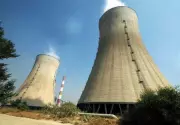
The US has welcomed India's 'Shanti' bill, paving the way for a deeper civil nuclear and clean energy partnership. This move strengthens strategic ties and supports India's energy goals.

Varanasi Municipal Corporation launches intensive campaign at Manikarnika Ghat, enforcing new rules for wood shops and planning parking to ease congestion. Read about the 'Clean Kashi' initiative.

Inox Clean Energy Ltd acquires Vibrant Energy's 1337 MW renewable portfolio from Macquarie, boosting its capacity target to 10 GW by FY28. Read the full details.

Supreme Court narrows 'no-go zones' for Great Indian Bustard, freeing land for solar & wind projects. New science-led framework balances conservation with India's clean energy goals. Read the full analysis.
India's Parliament passes the landmark SHANTI Bill 2025, opening the civil nuclear sector to private and foreign investment for the first time, aiming for 100 GW nuclear capacity by 2047. Read the full analysis.
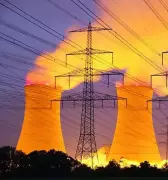
India's new SHANTI Bill transforms nuclear governance, embeds lifecycle safety in law, and allows private participation to meet clean energy targets by 2047. Read the full analysis.

India's Parliament has passed the landmark SHANTI Atomic Energy Bill, 2025. PM Modi calls it a game-changer for technology and clean energy. Read the full details here.
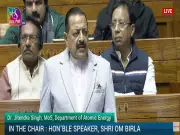
The Lok Sabha has passed the Nuclear Energy (Amendment) Bill, 2024, paving the way for private sector participation in India's nuclear energy sector to boost clean power generation. Read more.
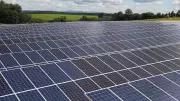
A new report reveals India's budget shows a gradual clean energy shift, but public finances remain heavily tied to fossil fuels. Experts urge faster transition.

India's natural gas consumption fell 8.6% in April-Oct FY26, casting doubt on the 2030 target of 15% energy share. Experts cite lack of power demand and cheaper alternatives.

West Bengal commits to 20% renewables by 2030. Minister Rabbani reveals plans for solar, biomass, and hybrid systems at Kolkata conclave. Explore the state's green energy roadmap.

China is making a massive $3.9 billion push in the global race for nuclear fusion energy, aiming for a 'sun on Earth'. Can this be the key to limitless, clean power? Explore the details.

Bihar signs two MoUs for 2,120MW pumped storage projects in Nawada, involving Rs 13,000 crore investment. The projects will create 8,000 jobs and boost renewable energy integration. Read more.
A new IISD report reveals India's clean energy subsidies rose sharply to Rs 32,000 crore in FY24, narrowing the gap with fossil fuel support. Non-fossil capacity now exceeds 50%, but PSU spending remains skewed.
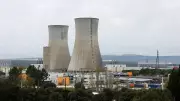
India plans major changes to its civil nuclear law to boost capacity to 100 GW, aiming for clean energy dominance. Explore the key amendments and their impact.
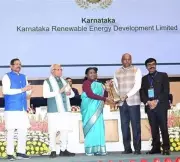
Karnataka clinches the National Energy Conservation Award 2025 as the best-performing state in energy efficiency, regaining its top spot after a close loss to Maharashtra in 2024. Read about the state's winning strategy.

Karnataka Renewable Energy Development Ltd (KREDL) has been honored with the National Energy Conservation Award 2025 by the Bureau of Energy Efficiency. Read about this prestigious recognition for sustainable efforts.

Across India, citizens are forced to pay for incomplete public projects through taxes and user charges. This in-depth report exposes the systemic failures and financial burden of abandoned infrastructure.

India achieves its highest-ever annual clean energy capacity addition of 31.25 GW, led by solar power. Minister Pralhad Joshi unveils new initiatives for Odisha, highlighting the nation's pivotal role in the global renewable surge.

Union Minister Jyotiraditya Scindia inaugurated projects worth Rs 646.39 crore in Nagaland, focusing on power, education, and roads. A major infrastructure push for the state. Read more.