
FM Sitharaman: Low Currency Confidence Drives Gold Volatility
Finance Minister Nirmala Sitharaman attributes recent gold price volatility to low confidence in global currencies, noting aggressive central bank buying as a key factor.

Finance Minister Nirmala Sitharaman attributes recent gold price volatility to low confidence in global currencies, noting aggressive central bank buying as a key factor.

Gujarat's GST revenue rose 11.3% year-on-year in January 2026 to Rs 7,742 crore, significantly higher than India's 6.2% growth. Total state tax collections reached Rs 11,557 crore.

Ahmedabad Municipal Corporation will issue a new tender for Subhash Bridge repairs after receiving only one bid. The bridge has been closed since December 4 due to structural issues, causing traffic congestion.
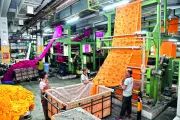
The India-US trade deal reduces tariffs to 18%, making Indian garments, leather, footwear, carpets, and shrimps more competitive against Bangladesh, Sri Lanka, and Turkey. Businesses await full clarity as exports to the US rose 11.3% to $59 billion.
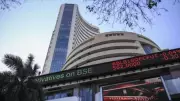
Indian stock markets staged a strong recovery on Monday, with Sensex gaining 1.2% to reclaim more than half of Sunday's post-Budget losses. The rally came despite concerns over STT hike impact on F&O trading.
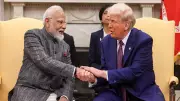
India and the US announce a bilateral trade deal reducing tariffs on Indian imports to 18%. PM Modi and President Trump discuss ending Russian oil purchases and boosting US energy exports.
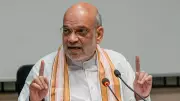
Union Home Minister Amit Shah declares the US-India trade agreement with 18% tariff reduction as a landmark achievement that will enhance bilateral relations and foster mutual economic growth.
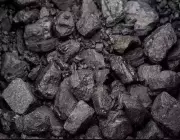
Singareni Collieries Company Limited (SCCL), India's major coal producer, operates without a full-time CMD for 1.5 months, delaying green energy initiatives and critical mineral exploration in Telangana.

India must transition from labor-intensive industries to knowledge-based sectors like AI and tech to drive sustainable economic growth and global competitiveness.

Workers' unions in Bengaluru, including the Domestic Workers Rights Union, have vowed to continue their fight for minimum wage after the Supreme Court dismissed their petition. The unions issued a joint statement reaffirming their commitment to labor righ

Industry leaders welcome the landmark India-US trade deal with tariff reductions, viewing it as strengthening bilateral economic ties and unlocking opportunities across sectors.

Kerala Chief Minister Pinarayi Vijayan has written to Union Finance Minister Nirmala Sitharaman demanding a judicial inquiry into the death of Confident Group chairman CJ Roy during an income tax search operation in Bengaluru.
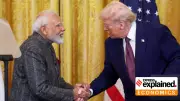
The recent India-US trade agreement, reducing tariffs from 50% to 18%, solidifies India's role as a strategic US ally and counterbalance to China in global trade. This pact addresses capital outflow concerns and boosts market confidence.

Kolkata Metro's Orange Line faces a one-year delay to mid-2028 due to unresolved traffic blocks at Chingrighata crossing, with officials citing state permission hurdles and funding assurances.
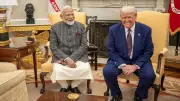
India and the US announce a landmark trade deal with US tariffs on Indian goods reduced from 25% to 18%. PM Modi and President Trump praise the agreement, highlighting strengthened bilateral ties and economic cooperation.

India's Union Budget 2026 faces criticism for failing to address inequality and gaps in social investment, with experts highlighting a development vision that remains limited to messaging.

The Nashik Municipal Corporation's Rs 30-crore multi-level car parking project at Raviwar Karanja has failed to draw private interest for the fourth time, despite being crucial for the 2027 Simhastha Kumbh Mela.
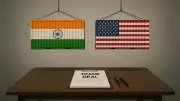
While US President Donald Trump announced tariff cuts for India, think tank GTRI warns of unanswered questions. Claims about India stopping Russian oil imports and $500B US purchases lack official confirmation.

Senior Indian ministers welcome landmark India-US trade agreement, highlighting tariff reductions, MSME opportunities, and strategic benefits for bilateral relations and economic growth.

Industry leaders in Punjab react to Union Budget 2026-27, highlighting its balanced approach favoring fiscal discipline and structural reforms over short-term relief for MSMEs.

The India-US trade deal announced by President Trump has triggered a strong market rally, with GIFT Nifty surging 800 points. Tariffs on Indian exports drop to 18%, boosting investor sentiment.
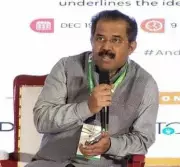
Andhra Pradesh recorded a 6.72% increase in net GST collections in January 2026, reaching Rs 3,073 crore despite GST 2.0 reforms that reduced rates on essentials and withdrew taxes on insurance.
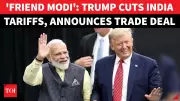
President Trump announces a new India-US trade agreement with tariff reductions to 18%. PM Modi agrees to decrease Russian oil imports and increase US energy purchases, reshaping global energy dynamics.
Analysis of how the Trump administration's tariffs influenced India-US trade, leading to a narrowed surplus and policy reforms ahead of the recent trade deal announcement.
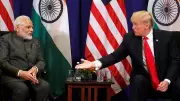
The recent trade agreement between the US and India under Trump and Modi marks a strategic shift, focusing on energy cooperation, technology partnerships, and strengthening geopolitical alliances to counterbalance China's influence.

Union Budget proposals to strengthen TReDS have raised hopes among Ludhiana's industry leaders that payment delays faced by MSMEs may finally be addressed through faster invoice settlement.

Gokce Guven, founder of fintech startup Kalder Inc., faces charges for defrauding investors of $7 million and using false documents to obtain an O-1A 'extraordinary ability' visa in the US.

An in-depth analysis of the Budget's focus on economic stability, its implications for the India-EU Free Trade Agreement, and specific benefits for NRIs and Odisha's development.

Odisha's coastal stretch identified as rare earth-rich zone with strategic minerals to boost semiconductor production and reduce import dependence, following Union Budget announcement.
Analysis of how Trump administration's tariffs influenced India-US trade relations, leading to narrowed trade surplus, increased US crude imports, and domestic policy reforms ahead of the pact.