

A Quarter-Century Culinary Odyssey in Kolkata
It feels surreal to acknowledge that this year marks twenty-five years of my life in Calcutta. Even more astonishing is the fact that when I first arrived in Delhi in October 2000, it was intended as merely a one-year hiatus—a respite from London's grueling work hours before potentially returning there or venturing to New York. However, destiny had other plans. The tragic events of September 11, 2001, with the fall of the twin towers occurring just a month before my contract concluded, brought global metropolises to a standstill. In that turmoil, India, and specifically Kolkata, emerged as my unexpected sanctuary and home.
The City of Flavors: A Market Revelation
My initial foray into Kolkata's culinary world did not begin in upscale restaurants but in its bustling, vibrant markets. These spaces felt like grand theatrical productions of food. Fishmongers vociferously advertised gleaming prawns, hilsa, and bhetki; butchers stood proudly behind marble counters; spice merchants vigilantly guarded mountains of aromatic cardamom, mace, and cloves; and baskets overflowed with verdant greens whose names eluded me. Unfamiliar fruits, gourds of every shape and size, and sweet shops that shimmered like jewellery counters captivated my senses. As I wandered inquisitively, vendors gradually recognized me not as a bewildered foreigner but as a curious chef, eagerly explaining seasonal produce and traditional dishes.
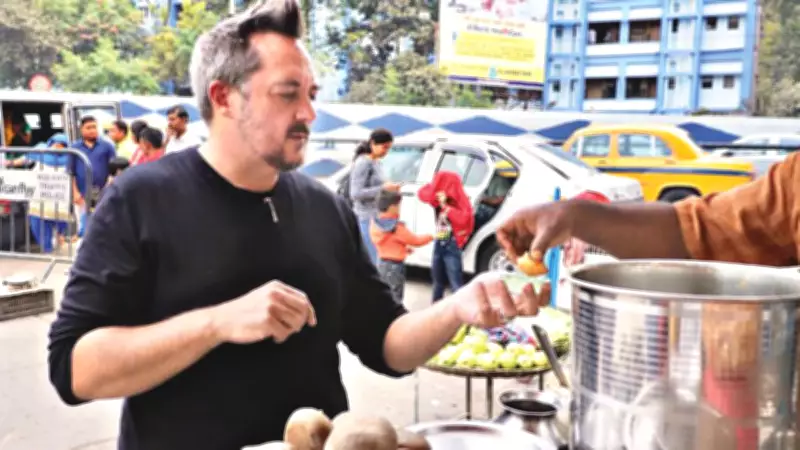
Winters in Bengal are truly unparalleled, with markets bursting with cauliflowers, black chillies, purple carrots, turnips, and giant red radishes. The arrival of nolen gur (date palm jaggery) inspires a flurry of sweets, savored as if the fleeting season might disappear overnight. The street food scene is equally unforgettable. Think of double egg chicken rolls from Nizam's, dripping with tangy kasundi and fiery chilli sauce. Phuchka vendors operate with lightning speed, ghugni simmering in battered pots, and jhalmuri tossed with pungent mustard oil, onions, and green chillies. Kebabs smoke enticingly over charcoal, cones of chanachur and peanuts appear magically, and tea stalls serve chai in earthen cups precisely when needed. In Kolkata, food transcends mere sustenance—it is a performance, a survival art, and I fell utterly under its enchanting spell.

The People Who Made It Home
Somewhere along this journey, as the city well knows, I married Pinky—a stunning, argumentative, stubborn, creative, and food-loving Bengali. As any local will attest, that marked the point of no return. What truly cemented my love for Kolkata was not solely its cuisine but its people—their sharp humour, endless conversations, spirited arguments, and an irrepressible joie de vivre that rivals the French themselves.
Kolkata is a city that does not unveil itself all at once; it requires active exploration to reveal its secrets. It unfolds gradually through experiences: a ferry ride across the Hooghly River, observing artisans in Kumartuli, enjoying a meal at a pice hotel, a night out on Park Street, breakfast at Tiretti Bazaar, the electrifying roar at Eden Gardens during an India-Pakistan cricket match, sipping chai behind Writers' Building, or an early morning stroll around Rabindra Sarobar. Calcutta will not seek you out; you must venture forth to discover it. Even after twenty-five years, I am still uncovering its hidden gems.
Park Street Tales: The Grand Theatre of Dining
Then there is Park Street, the illustrious stage of Calcutta's dining scene. For decades, it has served as the city's premier venue where food, music, romance, and mischief converge. Establishments like Trincas, Mocambo, The Blue Fox, Moulin Rouge, Peter Cat, and Olypub still resonate with stories from bygone eras—jazz bands, cabaret nights, sizzling steaks, and cocktails that may have seen better days but retain their charm. At Trincas, live bands play as plates circulate; Mocambo offers dishes frozen in time; Peter Cat is famed for its chelo kebab; and Olypub, though rougher around the edges, is beloved for its beer, whisky, and tenderloin steaks.

And then there is Flurys. On a crisp winter morning, it feels like stepping into a time capsule—pastries and fruitcakes displayed behind glass counters, and by Christmas, the ambiance is enough to make anyone fall a little in love with the city. Kolkata fundamentally reshaped my approach to cooking. I arrived with a foundation in European techniques, but the city taught me to embrace spontaneity. Mustard oil and panch phoron found their way into my repertoire, and my cuisine evolved into a dialogue between East and West—my personal interpretation of a modern Anglo-Indian culinary journey.
