Croatian Prime Minister Andrej Plenkovic Explores Agra's Iconic Monuments with Family
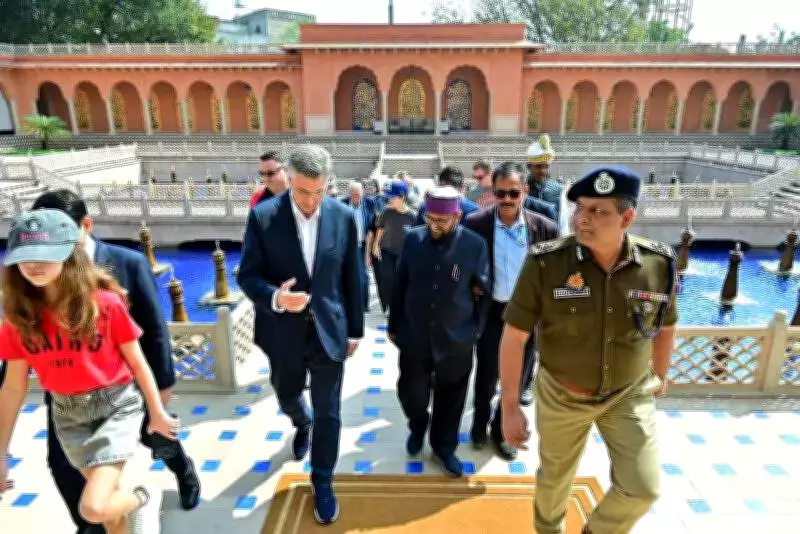
In a significant cultural and diplomatic visit, the Prime Minister of the Republic of Croatia, Andrej Plenkovic, along with his family, spent Saturday exploring two of India's most renowned UNESCO World Heritage Sites: the Taj Mahal and Agra Fort. The visit, which lasted approximately one and a half hours, highlighted the growing bilateral ties between India and Croatia.
Family Visit and Official Welcome
Prime Minister Plenkovic was accompanied by his wife, Ana Maslac Plenkovic, and their three children, making it a personal family excursion. Upon arrival in Agra, the Croatian delegation received a warm welcome from Uttar Pradesh cabinet minister Yogendra Upadhyay and chief secretary SP Goyal, underscoring the importance of the visit at the state level.
Symbolism of the Taj Mahal
During his time at the Taj Mahal, Plenkovic expressed admiration for the monument, describing it as a symbol that transcends time and boundaries. He emphasized that its enduring beauty should reflect the strengthening friendship between India and Croatia, pointing to shared cultural and historical appreciation.

The Croatian leader showed particular interest in the intricate details of the mausoleum, including:
- The elaborate calligraphy adorning the tombs of Emperor Shah Jahan and his wife Mumtaz Mahal.
- The exquisite pietra dura inlay work, a hallmark of Mughal architecture.
Tourist guide Nitin Singh provided insights, noting that the monument was constructed using Makrana marble, historically transported by bullock carts, adding a layer of historical context to the visit.
Historical Insights at Agra Fort
At Agra Fort, the delegation was briefed at the Musamman Burj, where Prime Minister Plenkovic learned about the poignant history of Emperor Shah Jahan's eight-year confinement by his son Aurangzeb. This segment of the tour offered a deeper understanding of Mughal history and the architectural significance of the fort.
The visit not only served as a cultural exchange but also reinforced diplomatic relations, with both nations looking to foster closer ties through shared heritage and mutual respect.