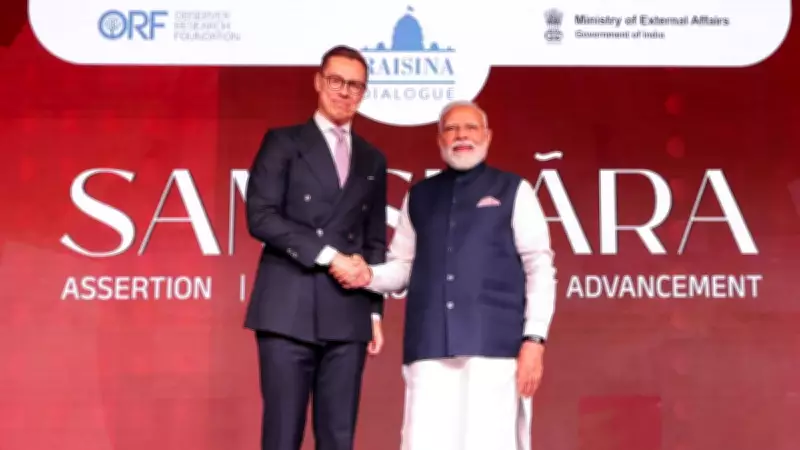
Finland President Alexander Stubb Declares India's Pivotal Role in Shaping New Global Order
In a significant statement that underscores the shifting dynamics of global power, Finland President Alexander Stubb has asserted that India holds a vital position in determining the new world order. He emphasized that the era of Western domination has conclusively ended, marking a transformative phase in international relations. This declaration highlights India's escalating influence on the world stage and its strategic importance in contemporary geopolitics.
End of Western Hegemony and India's Ascendance
President Stubb articulated that the longstanding period of Western supremacy, which characterized much of modern history, is now over. He pointed to the rise of emerging economies and nations like India as key drivers of this monumental shift. According to Stubb, India's robust economic growth, demographic advantages, and diplomatic prowess position it as a central player in redefining global norms and structures.
The Finnish leader elaborated on several factors contributing to India's pivotal role:

- Economic Power: India's rapidly expanding economy, now among the world's largest, provides it with substantial leverage in international trade and finance.
- Demographic Dividend: With a young and growing population, India offers a dynamic workforce and consumer market that influences global trends.
- Strategic Diplomacy: India's active engagement in multilateral forums and its non-aligned stance enhance its ability to mediate and shape global policies.
Implications for Global Governance and International Relations
Stubb's remarks signal a broader recognition among global leaders of the need for a more inclusive and multipolar world order. He suggested that the traditional dominance of Western nations is giving way to a more balanced distribution of power, where countries like India play crucial roles in addressing global challenges such as climate change, security, and economic stability.
Key implications highlighted by President Stubb include:
- Enhanced Collaboration: Increased cooperation between India and other nations, including Finland, to foster innovation and sustainable development.
- Policy Reforms: Potential reforms in international institutions to better reflect the contributions and perspectives of emerging powers.
- Geopolitical Realignments: Shifts in alliances and partnerships as countries adapt to India's growing influence and the decline of Western hegemony.
President Stubb's comments come at a time when global tensions and economic uncertainties are prompting reevaluations of power structures. By acknowledging India's critical role, he aligns with a growing consensus that the future world order will be shaped by diverse voices and collaborative efforts rather than unilateral dominance.