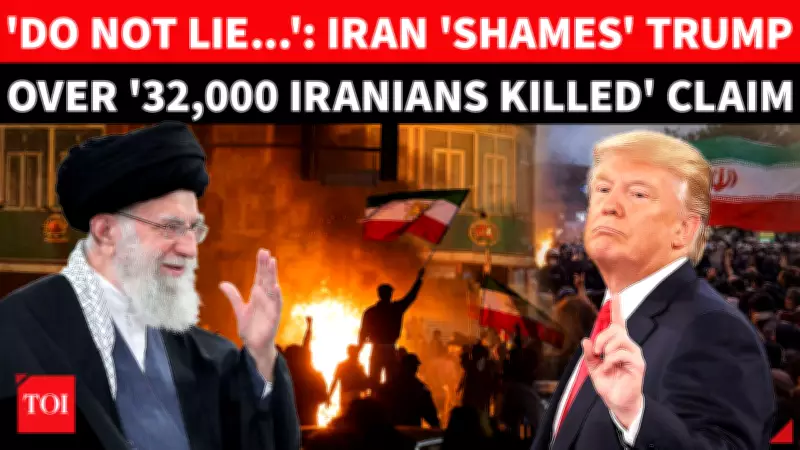
Iran Issues Fiery Challenge to Trump Over Protest Death Claims
In a dramatic escalation of diplomatic tensions, Iran has publicly demanded that former US President Donald Trump substantiate his explosive claim that 32,000 people were killed during anti-regime protests across the country. The challenge, delivered by Iranian Foreign Minister Seyed Abbas Araghchi, has rapidly gone viral on social media platforms, capturing global attention.
Araghchi's Viral Outburst and Official Rebuttal
Foreign Minister Araghchi launched a scathing rebuttal, declaring "Prove it or shut up!" in response to Trump's allegations. He emphasized that the Iranian government has officially published a detailed list documenting 3,117 victims from the protests, directly contradicting Trump's figure. Araghchi challenged critics to present any credible evidence supporting the higher death toll, framing the demand as a test of accountability and truth in international discourse.
Heightened US-Iran Tensions and Military Posturing
This fiery exchange occurs against a backdrop of significantly heightened tensions between the United States and Iran, with both nations continuing to display their military capabilities in strategic regions. The verbal clash adds a new layer of complexity to an already volatile relationship, marked by historical disputes over nuclear programs, regional influence, and human rights issues.

Analysts suggest that Araghchi's viral outburst is part of a broader Iranian strategy to counter Western narratives and assert sovereignty in the face of external criticism. The timing is particularly sensitive, as it coincides with ongoing geopolitical maneuvers involving other global powers, further complicating the diplomatic landscape.
Global Reactions and Implications
The international community is closely monitoring this development, as it could influence future diplomatic engagements and policy decisions regarding Iran. The viral nature of Araghchi's challenge underscores the power of digital media in shaping contemporary geopolitical debates, allowing such confrontations to reach a global audience instantaneously.
As tensions simmer, the demand for evidence highlights ongoing disputes over factual accuracy in international relations, with potential ramifications for bilateral talks, sanctions, and regional stability. The situation remains fluid, with observers awaiting any response from Trump or US officials to Iran's provocative challenge.