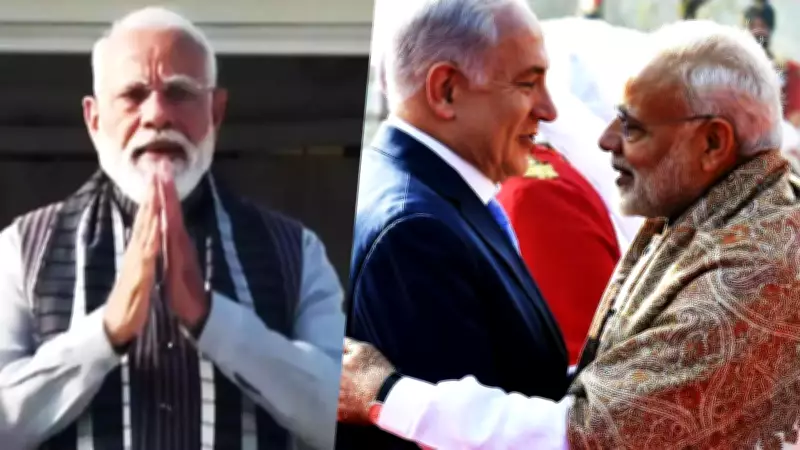
PM Modi's Israel Visit: 'Dear Friend' Netanyahu Proposes India as Key Hexagon Ally
Prime Minister Narendra Modi's visit to Israel comes at a pivotal geopolitical moment, with the Indian leader referring to Israeli Prime Minister Benjamin Netanyahu as a "dear friend" in a gesture signaling continuity in a partnership that spans multiple critical domains. The visit underscores the deep-rooted strategic relationship between the two nations, which has grown significantly over the years.
Strengthening Bilateral Ties Across Key Sectors
The partnership between India and Israel is multifaceted, covering areas such as defence, cyber security, innovation, and trade. This visit aims to further solidify these connections through high-level talks and discussions on collaborative projects. Modi's address to the Knesset, Israel's parliament, is expected to outline India's vision for enhanced cooperation and mutual benefits in these sectors.
Defence and security collaborations have been a cornerstone of this relationship, with both countries engaging in joint military exercises and technology transfers. The cyber security aspect is particularly crucial in today's digital age, where threats are evolving rapidly. Innovation and trade ties also play a significant role, with Israeli startups and Indian markets finding synergies in technology and business ventures.

Netanyahu's 'Hexagon Alliance' Pitch: A New Geopolitical Bloc
The bigger headline from this visit is Netanyahu's proposal for a "hexagon alliance," a strategic bloc of nations that includes India. This alliance is designed to counter radical Shia and Sunni networks in the region, addressing security concerns that have escalated in recent times. The proposal comes amid shifting dynamics in the Middle East, where new defence pacts are emerging, such as those between Pakistan and Saudi Arabia.
Iran remains at the centre of regional tensions, influencing the geopolitical landscape and prompting nations to reassess their alliances. The hexagon alliance could serve as a counterbalance to these developments, offering a collective security framework. India's potential role in this bloc highlights its growing importance on the global stage and its ability to navigate complex diplomatic waters.
India's Balancing Act in the Arab World
As India strengthens its ties with Israel, it must also balance its wider interests in the Arab world. The country has longstanding relationships with several Arab nations, which are crucial for energy security, trade, and diaspora connections. Modi's visit and the discussions around the hexagon alliance will require careful diplomatic maneuvering to ensure that these relationships are not compromised.
The evolving security architecture in the region presents both challenges and opportunities for India. High-level talks during this visit could shape how New Delhi positions itself, potentially leading to new defence agreements or collaborative initiatives. The outcome of these discussions will be closely watched by global observers, as it may influence regional stability and India's foreign policy trajectory.
In summary, PM Modi's Israel visit is not just a routine diplomatic engagement but a strategic move with far-reaching implications. The "dear friend" remark and the hexagon alliance proposal underscore the depth of India-Israel relations and the complex geopolitical calculations at play. As the region remains in flux, India's role as a key ally in this proposed bloc could redefine its position in global politics.