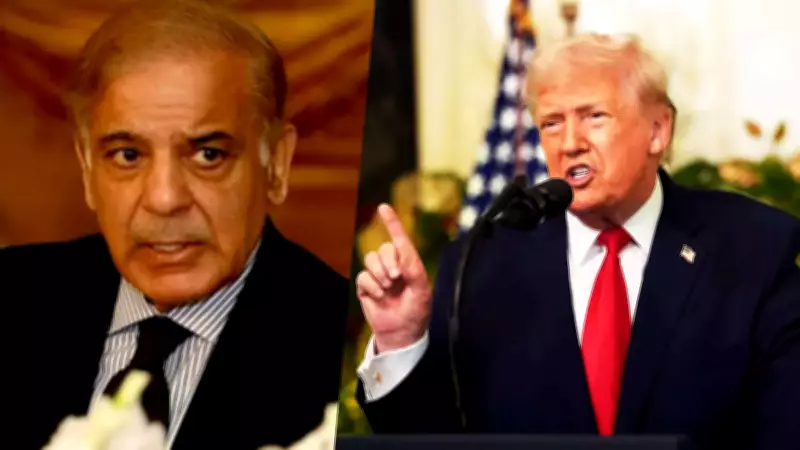
Trump's Dramatic Claim: Did He Save Pakistan PM Shehbaz Sharif's Life?
In a recent State of the Union address, former US President Donald Trump revived a controversial assertion that he prevented a nuclear war between India and Pakistan. His dramatic statement, delivered with characteristic flair, included the claim that millions of people believed Pakistan's Prime Minister Shehbaz Sharif would have died without his personal intervention. This remark quickly ignited social media platforms, where users interpreted it as a direct declaration that Trump had saved Sharif's life.
The Nuance Behind the Statement
However, a closer examination reveals that Trump did not explicitly state he saved Shehbaz Sharif's life. Instead, he has repeatedly asserted that Pakistani leaders have credited him with saving millions of lives through his diplomatic efforts during a tense period in South Asia. This distinction is crucial, as it highlights the gap between Trump's broader claim of averting catastrophe and the specific interpretation circulating online.
India's Firm Rejection of US Mediation
India has consistently rejected any suggestion of US mediation in its conflicts with Pakistan. New Delhi maintains that the ceasefire agreement was achieved through direct military-to-military talks following Operation Sindoor, a strategic military action. Indian officials emphasize that the resolution was a bilateral effort, underscoring their stance against external involvement in regional disputes.

- Trump's claim focuses on preventing nuclear war, not specifically saving an individual's life.
- Social media amplification has led to widespread misinterpretation of his words.
- India asserts sovereignty in conflict resolution, denying US role in ceasefire talks.
The Broader Context of Trump's Assertions
This incident is part of a pattern where Trump has highlighted his foreign policy achievements, often with grandiose language. His address tapped into ongoing geopolitical tensions, reminding audiences of his administration's involvement in South Asian affairs. The claim about Pakistan and India reflects his narrative of strong leadership on the global stage, though it remains unverified by independent sources.
Analysis:- The statement serves political purposes, reinforcing Trump's image as a decisive leader.
- It risks inflaming diplomatic sensitivities between India, Pakistan, and the US.
- The lack of concrete evidence leaves room for skepticism and debate.
In summary, while Trump's remarks have sparked speculation about saving Shehbaz Sharif's life, the reality is more nuanced. His claim centers on averting a larger conflict, with India firmly disputing any US mediation role. This episode underscores the importance of distinguishing between political rhetoric and confirmed facts in international diplomacy.