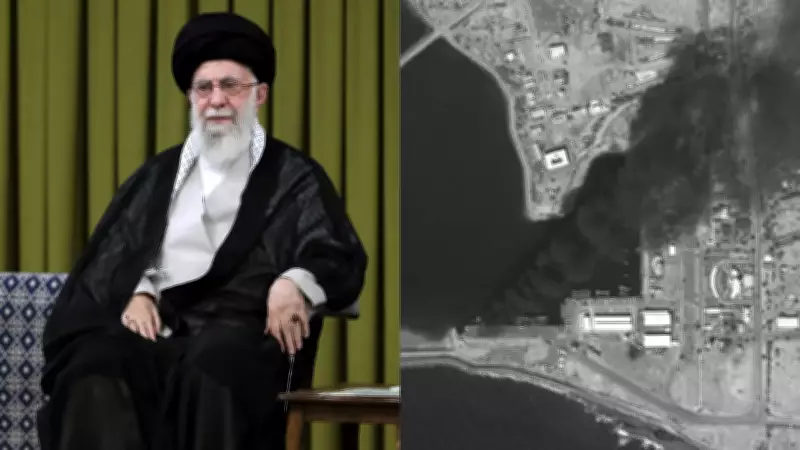
Iran's Supreme Leader Killed in US-Israel Joint Airstrike Operation
In a dramatic escalation of Middle East tensions, Iran's Supreme Leader Ayatollah Ali Khamenei was killed during a daylight pre-emptive airstrike conducted jointly by the United States and Israel on Saturday. Iranian state media confirmed his death early Sunday, marking a pivotal moment in regional geopolitics.
Operation 'The Epic Fury' Targets Leadership Meeting
The coordinated military operation, codenamed 'The Epic Fury', was specifically timed to coincide with a meeting of Iran's top leadership. According to US officials speaking anonymously, the strike was designed to target Khamenei first to maintain the element of surprise, amid intelligence concerns that he might go into hiding if given advance warning.
Two Iranian sources revealed to Reuters that Khamenei had met with Supreme National Security Council Secretary Ali Larijani and other senior advisers at a secure location shortly before the strikes commenced. This meeting, initially expected for Saturday evening in Tehran, was detected by Israeli intelligence occurring Saturday morning, prompting the allied forces to move their operation forward.

Strategic Timing During Ramadan and Workweek
The joint US-Israel operation, reportedly planned for months, was executed during the Muslim holy month of Ramadan and at the start of the Iranian workweek. This strategic timing reflects careful military planning aimed at maximizing impact while capitalizing on potential vulnerabilities in Iran's defensive posture.
Satellite imagery reviewed by Reuters confirmed that Khamenei's high-security compound in Tehran was targeted and destroyed at the beginning of the operation. The precise location of his final meeting remains undisclosed, but the compound's destruction underscores the operation's precision and lethal intent.
Immediate Regional Fallout and Retaliatory Strikes
The attack has triggered immediate retaliatory violence across the Middle East, with explosions reported in Abu Dhabi and Doha. Iranian forces launched Operation 'Truthful Promise 4', targeting US military bases throughout the region. Additionally, missiles struck the US navy headquarters in Bahrain, demonstrating Iran's capacity for rapid military response.
US President Donald Trump described Khamenei's death as offering Iranians their "greatest chance" to reclaim control of their country, framing the strike as necessary to prevent a potential resurgence of Iran's nuclear capabilities. This action represents a significant departure from Trump's campaign promises to avoid "forever wars" and reflects his "America First" platform's aggressive foreign policy approach.
Background of Escalating Tensions
The strike follows weeks of escalating tensions, with the Trump administration deploying what officials described as the largest concentration of US warships and aircraft in the Middle East in decades. While publicly pushing for a nuclear deal, the administration faced intelligence indicating Tehran had begun rebuilding damaged nuclear infrastructure despite previous claims of having "obliterated" Iran's nuclear program.
Intelligence assessments revealed that Iran had developed domestic capability to produce high-quality centrifuges essential for enriching uranium to weapons-grade levels. Although Iran maintains it has not enriched uranium since June and seeks to avoid war, it has barred international inspectors from accessing sites targeted in previous US strikes.
Satellite imagery analyzed by the Associated Press shows renewed activity at two previously targeted locations, suggesting efforts to assess damage and potentially recover material. This development, combined with mounting domestic unrest following nationwide protests in Iran, created the volatile backdrop for Saturday's unprecedented military action.
Global Implications and Future Uncertainty
The killing of Iran's Supreme Leader marks a dramatic escalation in US intervention in Iran, raising serious concerns about broader regional conflict. The operation showcases the extended military reach of an administration that came to office promising to avoid prolonged foreign engagements, yet has now undertaken one of the most significant targeted strikes in recent Middle East history.

As retaliatory strikes continue across the region and global leaders assess the implications, the world watches anxiously to see how Iran's political structure will respond to this decapitation of its leadership. The vacuum created by Khamenei's death, combined with existing domestic unrest and regional military responses, suggests prolonged instability ahead for the Middle East.