Agitation Escalates into Crisis for Haryana Government
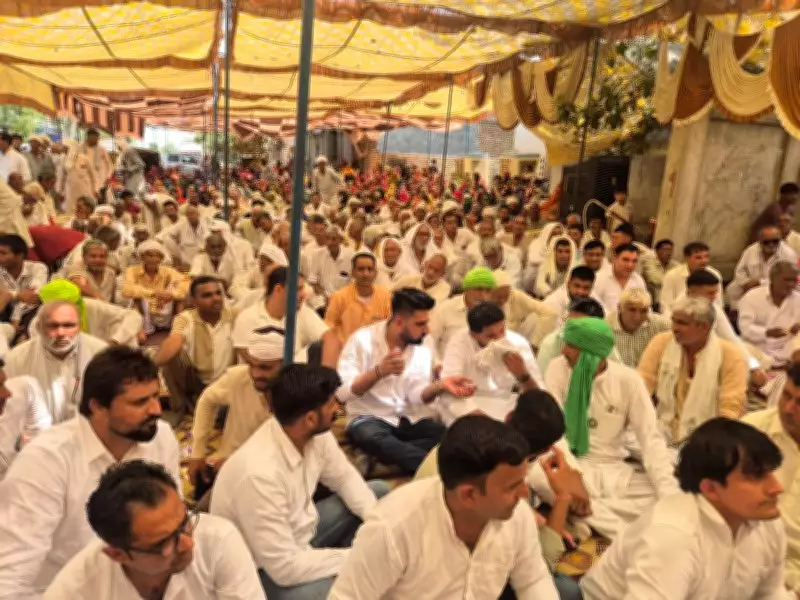
The prolonged agitation in Chanot village of Hansi district, Haryana, has evolved from a demand for drinking water into a major test of the state government’s crisis management, exposing administrative lapses and the absence of effective mediation between protesters and the state. The protest, which has witnessed a police lathicharge, registration of criminal cases, a fast unto death, and eventually a meeting between villagers and Chief Minister Nayab Singh Saini, centers on a demand to provide the village with drinking water by tapping into the Bhakra pipeline passing through its fields.
Pipeline Dispute and Technical Details
The dispute revolves around a 27-km-long, 900-mm pipeline being laid from the Rajli canal head at an estimated cost of Rs 66 crore to meet Hansi town’s drinking water requirements. Villagers have demanded that a smaller-capacity T-joint be installed on the pipeline to supply water to Chanot, arguing that it would permanently resolve the village’s chronic water shortage. Public Health Engineering Department Executive Engineer SK Tyagi said nearly 60% of the pipeline work had been completed under the AMRUT scheme, which is meant exclusively for urban areas.
Failed Mediation and Backlash
The agitation took a dramatic turn on June 20 when former Haryana Sarpanches Association president Somesh Kumar entered the scene. Claiming to have been sent by officials from Chandigarh, he reportedly persuaded villagers to end their dharna after assuring them that their demand had been accepted. A T-joint was subsequently installed on the pipeline using heavy machinery in an exercise that continued for nearly 12 hours. However, the district administration later termed the installation illegal. In a midnight operation, officials removed the T-joint, triggering protests. Police resorted to lathicharge and lobbed tear gas shells to disperse villagers who resisted the removal. The incident has left villagers feeling betrayed.

Villagers' Grievances and Unmet Promises
Himanshu, husband of village sarpanch Saraswati, said the demand had been pending with the administration and local MLA Vinod Bhayana for a long time. “When the officials started dithering on the issue, the villagers started dharna on May 16 to press for their demand,” he said. He added that inadequate drinking water supply had forced many residents to buy water from private tanker operators. During the agitation, several ministers and officials attempted to persuade villagers to withdraw the protest by assuring them of water through a separate pipeline, but the offer failed to convince them.
Political Connections and Hardened Stance
Villagers allege that Somesh Kumar, who is seen as being close to senior BJP leaders with photographs alongside Amit Shah, Rajnath Singh and former CM Manohar Lal Khattar circulating on social media, was used to defuse the protest without delivering on the promise. Kumar left the village a day after the T-joint was installed, citing ill health. The episode has hardened the villagers’ stand. They now insist they will not end the dharna until the T-joint is reinstalled. Beyond the immediate dispute, the agitation has exposed gaps in the administration’s handling of a sensitive issue. While informal intermediaries have often been used to broker peace during protests, this attempt appears to have backfired. With negotiations stalled, XEN Tyagi said, “The matter is with the state government now.”