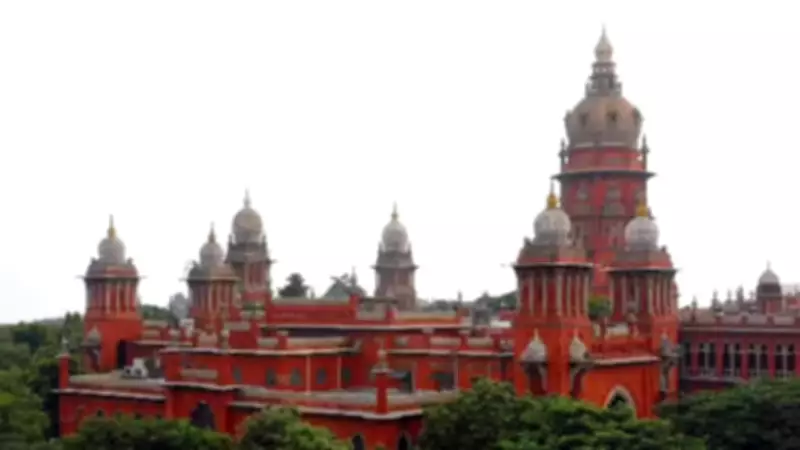
The Madras High Court has stayed the construction of a proposed church near the Mariyamman Temple in Coimbatore, stating that mala fide intention cannot be ruled out. The division bench of Justices G R Swaminathan and V Lakshminarayanan highlighted Coimbatore's history of communal riots and bomb blasts, noting that the church would be built within a stone's throw of the temple despite only a few Christian families residing nearby.
Court Observations
The court pointed out that revenue records indicate the site is a public road. The bench remarked that Coimbatore is a communally sensitive city, having witnessed bomb blasts and bloody religious riots. The proposed church would be situated in close proximity to the existing Mariyamman Temple. With only a handful of Christian families in the area, the court found that proposing a large church near the temple raised suspicions of mala fide intentions.
Petitioner's Concerns
The interim order was passed on a plea by N Balasubramaniyam, who suggested that the new building could be a center for conversion activities. The court noted the petitioner's submission that posters have appeared in parts of Tamil Nadu calling for the construction of churches in every village since the new government led by C Joseph Vijay was formed. The judges emphasized that India is a secular and pluralist nation, and religious amity must be preserved.

Legal Context
The court clarified that the situation would have been different if the construction was on undisputed patta land, without any other religious structure nearby, or without opposition. However, in this case, revenue records show the site is a public road, the location is too close to an old temple, and there is vigorous resistance from the community.
Additional Submissions
The court also placed on record the petitioner's submission that Tamil Nadu Assembly Speaker JCD Prabhakar quoted Bible verses in his inaugural address to the legislative assembly, and Udhayanidhi Stalin, leader of the opposition, called for the annihilation of Sanatana Dharma.