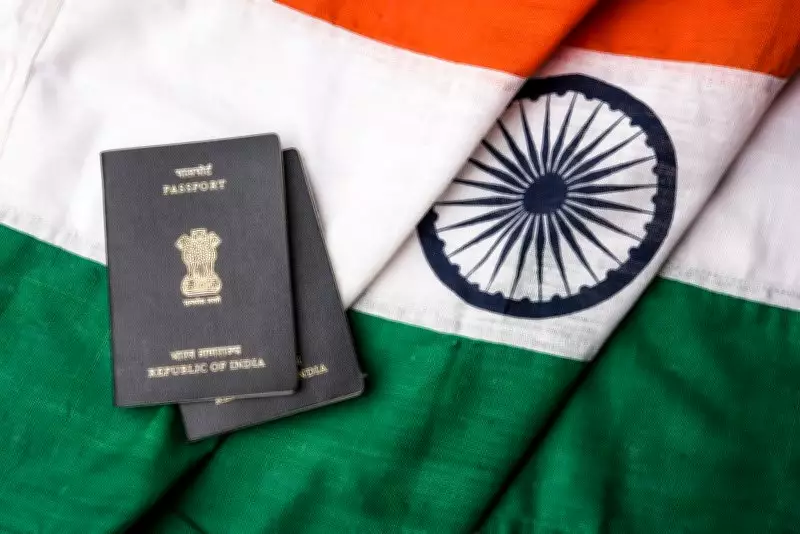
Government Sidesteps Defining Citizenship Documents
The Union Home Ministry has repeatedly avoided providing a clear answer on what documents are considered valid proof of Indian citizenship, despite persistent questions raised in Parliament. The ambiguity comes amid ongoing controversy over whether a passport qualifies as proof of citizenship.
In responses to lawmakers, the ministry has not specified any particular document as definitive proof. Instead, it has pointed to the legal framework under the Citizenship Act, 1955, as amended in 2004, which empowers the central government to compulsorily register every citizen and issue a National Identity Card. However, this provision has not yet been implemented.
Ministerial Responses in Parliament
On August 12, 2025, Minister of State for Home Nityanand Rai, in reply to a question seeking details of categories of documents required to prove citizenship, did not list any specific document. He stated, “Citizenship of India is governed under the provisions of the Citizenship Act, 1955, and rules made thereunder. It can be acquired by birth (Section 3), descent (Section 4), registration (Section 5), naturalisation (Section 6) or incorporation of territory (Section 7). The eligibility criteria for acquisition and determination of citizenship is as per the provisions of the Act and the rules made thereunder.”

Earlier, on August 5, 2025, Minister of State for Home Bandi Sanjay Kumar addressed similar queries on whether an identity card is proof of Indian citizenship and which cards are admissible. He reiterated the 2004 amendment to the Citizenship Act, which provides for compulsory registration of citizens and issuance of a National Identity Card. He also referenced the Citizenship (Registration of Citizens and Issue of National Identity Card) Rules, 2003, which state that “The Registrar General of Citizen Registration, or any officer authorised by him in this behalf, shall issue the National Identity Card to every citizen whose particulars are entered in the National Register of Indian Citizens.” The rules further note that National Identity Cards are government property and citizens are responsible for their safekeeping.
No Implementation Despite Legal Provision
Despite the legal mandate, the National Identity Card scheme has not been rolled out. This leaves Indian citizens without a standardized document to prove citizenship, fueling confusion and debate. The Home Ministry's reluctance to endorse any existing document—such as a passport, voter ID, or Aadhaar—as definitive proof has drawn criticism from lawmakers and legal experts.
The issue has been raised in Parliament multiple times, but the ministry consistently avoids specifying documents, instead citing the Citizenship Act and the rules. This has led to calls for clarity and implementation of the National Identity Card system to resolve the ambiguity.