BJP's Strategic Move: Categorizing Challenging Seats for UP Assembly Elections
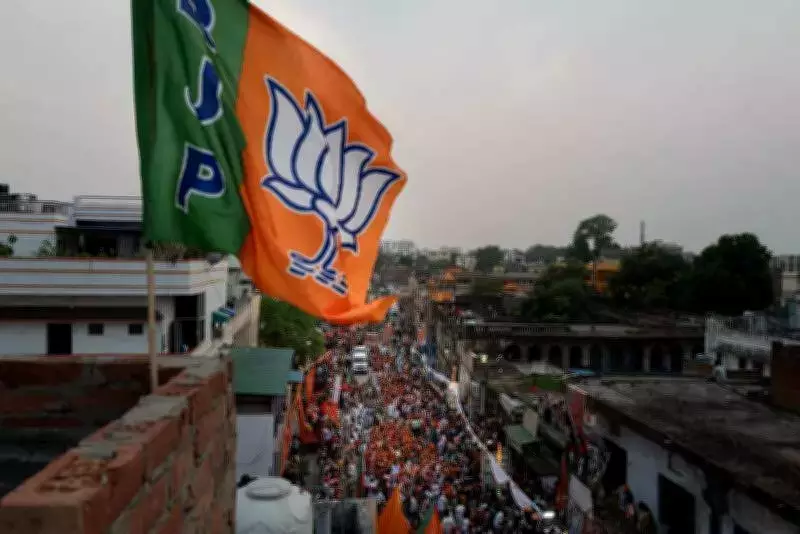
In a meticulous preparation for the upcoming Uttar Pradesh Assembly elections, the Bharatiya Janata Party (BJP) has identified and categorized challenging seats into six distinct groups. This initiative aims to provide special focus and enhance the party's electoral performance in these critical constituencies. The strategy involves a detailed analysis of past results and demographic factors to tailor ground-level campaigns effectively.
Six Categories of Challenging Seats
The BJP has segmented the challenging seats based on various electoral dynamics:
- Seats where BJP came second in the 2022 elections: These are constituencies where the party faced intense competition, primarily from the Samajwadi Party and Congress. In the 2022 Assembly elections, BJP contested 376 seats, winning 255 and securing second place on 106 seats. The party plans to rework its strategies and amplify voter outreach in these areas to convert narrow defeats into victories.
- Seats where BJP was a distant third: This category includes challenging terrains like Kunda, Babaganj, Saheswan, Jalalpur, and Rasra. In Malhani, the party even came fourth behind SP, JD(U), and BSP. These seats require significant political shifts for BJP to become competitive, prompting the development of special strategies.
- Opposition pocket boroughs: Constituencies traditionally dominated by the Samajwadi Party and Congress, such as Etawah, Mainpuri, Kannauj, Azamgarh, Firozabad, Amethi, and Rae Bareli. BJP intends to deploy senior functionaries, including central leadership, for deeper coordination to challenge the opposition's stronghold.
- Seats lost in 2022 but won in bypolls: Including Katehari, Rampur, Kundarki, and Milkipur. Analysts note that seats like Rampur and Kundarki have historically been under SP influence with a strong minority voter presence, making them focal points for BJP's renewed efforts.
- Seats where BJP's allies lost: Data shows losses for allies like the NISHAD Party in Kalpi, Handia, Katehari, and Atrauliya, and Apna Dal (S) in Suar, Bacchrawan, Chail, Soraon, and Partappur. BJP plans to field its candidates in these seats after formal discussions with allies.
- Seats dominated by Muslim population: Approximately 140 seats where Muslim voters have a considerable presence and can decisively influence outcomes. BJP will depute its minority wing members to engage with Muslim communities and counter opposition influence.
Strategic Implications and Expert Analysis
This categorization exercise represents a micro-level strategy rather than a broad statewide campaign. A senior UP BJP functionary emphasized that the party aims to convert narrow defeats into wins through targeted political management. Experts interpret this as a shift from macro messaging focused on development and governance to constituency-specific political engineering. By addressing unique challenges in each category, BJP seeks to optimize its electoral machinery and secure a stronger mandate in the hustings.

The move underscores BJP's adaptive approach to Uttar Pradesh's complex political landscape, leveraging data-driven insights to overcome hurdles and strengthen its position ahead of the assembly elections.